Look, I'm going to say the quiet part out loud: the lowest pump or tool quote is usually the most expensive decision you'll make this quarter.
I'm a service manager at a commercial plumbing and drain company. I've handled 600+ emergency sump and sewage pump calls in 12 years, including same-day turnarounds for property management clients. When I'm triaging a rush order at 4:30 p.m. on a Friday, I'm not asking 'what's the cheapest?' I'm asking 'what gets this basement dry and this crew back online without a second call?'
That's the total cost of ownership (TCO) mindset. It's not about buying the most expensive thing. It's about counting the costs that don't show up on the first quote.
The $500 pump that cost $2,300
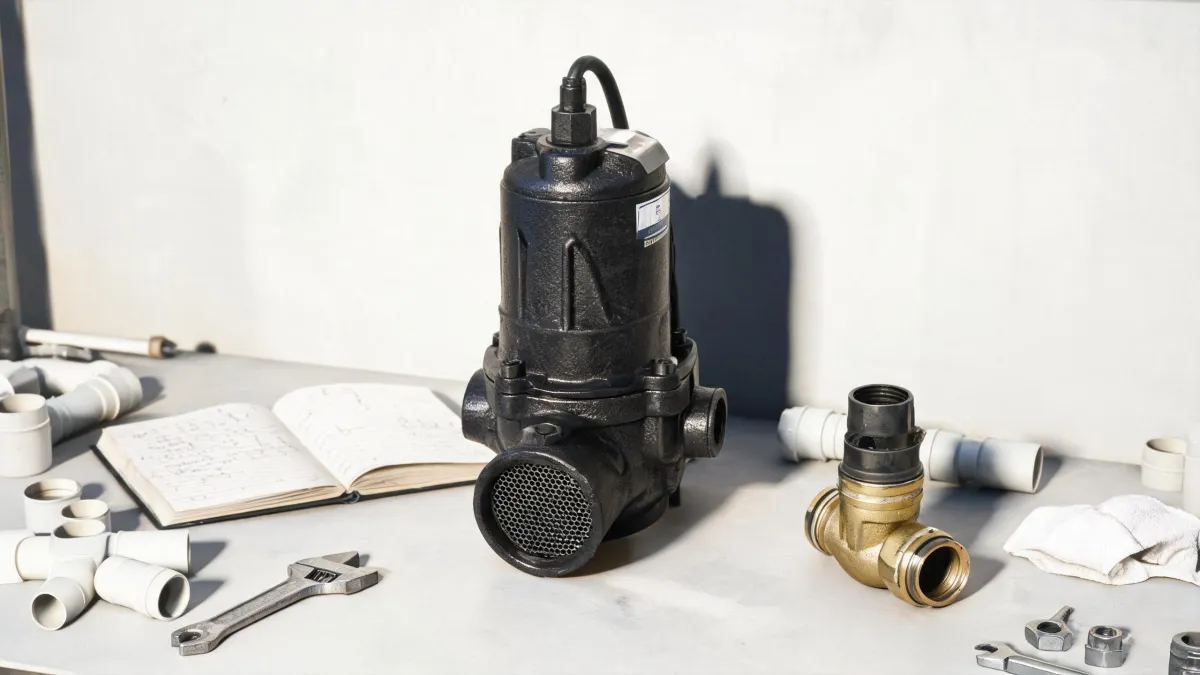
In March 2024, a property manager called at 6:10 a.m. about a backed-up sewage basin at a 24-unit building. Normal turnaround for a replacement pump was next-day. We found a 1 2 hp Zoeller sewage pump at a local distributor, paid a rush premium, and had it running by 1 p.m. The all-in cost was around $1,450: pump, discharge kit, check valve, labor, and emergency rate.
The previous pump had been a bargain online model installed three years earlier for about $500. It failed early, and the first repair attempt cost $800. Then the basin flooded again, ruining stored equipment. By the time we replaced it, the 'cheap' pump had a TCO north of $2,300—and that doesn't count the tenant complaints.
According to the Hydraulic Institute's Pump Systems Matter initiative, initial purchase price is often a small slice of a pump's lifetime cost; energy, maintenance, downtime, and replacement dominate. For sewage and sump pumps, downtime is the monster.
Where TCO hides in a pump quote
Most first quotes look simple: pump, maybe a check valve, install. The real scope is bigger.
- Discharge and check valve: A pump without the right check valve can short-cycle and burn out.
- Basin and float: Wrong float travel means nuisance alarms or dry runs.
- Power and controls: Battery backup, alarm, and GFCI protection.
- Labor and access: Cast-iron pumps are heavy; a two-person install is not free.
- Failure cost: Flooded inventory, ruined drywall, emergency calls, tenant credits.
This is why I don't compare a Zoeller 1/4 hp sump pump to a no-name 1/4 hp pump by price alone. I compare head pressure at actual discharge height, cycle frequency, switch type, and whether the local distributor stocks the replacement float and switch. A Zoeller 1/4 hp sump pump isn't automatically right for every pit—but when it fits the basin and head curve, the parts availability is a TCO advantage.
Tools are part of the system
Here's something vendors won't tell you: the pump is only one line item in an emergency repair. The tools you grab at 2 a.m. decide whether the job takes 45 minutes or three hours.
A V20 RP 1/2 inch drive impact wrench kit is a good example. If you're pulling corroded flange bolts on a sewage pump, a weak impact wrench means cheater bars, rounded nuts, and a lot of swearing. The kit might cost more upfront than a bargain corded wrench, but it saves time on every call. Time is the most expensive part of emergency service.
Same with the small stuff. Keep the 3.0 portable washer manual in the truck, not in the office. I know that sounds like a no-brainer, but I've watched a crew spend 40 minutes trying to diagnose a pressure issue because nobody remembered the correct nozzle and unloader settings. A manual isn't glamorous. It's cheap insurance against a callback.
Can butterfly valve be used for flow control?
Now, let's talk about a question I get from maintenance techs: can butterfly valve be used for flow control?
Short answer: yes, but it's usually not the best choice for continuous throttling. A butterfly valve can modulate flow by partially opening the disc, and in some low-pressure, clean-water systems it's acceptable for occasional balancing. But standard resilient-seated butterfly valves are primarily isolation valves. When you throttle them at low openings, the disc sits right in the flow path, creating turbulence, vibration, and erosion. That can chew up the seat and create a maintenance headache.
For real flow control, a globe valve, V-ball valve, or a high-performance butterfly valve designed for throttling is usually the smarter TCO play. If you must throttle a butterfly valve, check the manufacturer's limits and avoid continuous operation near the seat.
I've seen a cheap butterfly valve used as a throttle on a solids-handling line. Six months later, the seat was gone, the downstream pump was cycling weirdly, and the 'savings' disappeared in labor and downtime. That's a classic TCO miss.
The objection: 'But we have a budget'
Look, I get it. Budgets are real. I'm not saying buy the most expensive pump or the fanciest impact wrench. I'm saying calculate the all-in number.
The $500 quote turned into $800 after shipping, setup, and revision fees. The $650 all-inclusive quote was actually cheaper. That's not a sales pitch; that's arithmetic. When you compare vendors, ask for the full scope: parts, labor, disposal, permits, startup, warranty terms, and who stocks the spare parts.
I've tested 6 different rush delivery options; here's what actually works: a local distributor with real stock and a service counter beats a website with a low price and a 5-day lead time. Especially when the water is rising.
What I do now
It took me 8 years and about 400 emergency calls to understand that the cheapest quote is often the start of the most expensive week. After that, our company policy became simple: for sump and sewage pumps, we price the job on TCO. That means:
- Size the pump to the basin, head, and solids.
- Price the complete install: pump, check valve, discharge, float, alarm, backup.
- Check parts availability before we commit.
- Add the tool cost into the crew's productivity, not a separate 'nice to have'.
- Ask: what happens if this fails during a storm?
When I compared two flooded basements side by side—same water level, same call time—one with a properly sized Zoeller 1/2 hp sewage pump and one with a bargain pump, I finally understood why TCO matters. The Zoeller job was dry and done. The bargain job had a second call before the end of the week.
Bottom line: the lowest price is a red flag, not a trophy. A 1/2 hp Zoeller sewage pump, a Zoeller 1/4 hp sump pump, a V20 RP 1/2 inch drive impact wrench kit, or a butterfly valve for flow control—none of them are automatically right. But if you ignore total cost, you're not saving money. You're just delaying the invoice.
Prices and lead times vary by region and date; verify current pricing and specifications with your distributor. Pump sizing should be based on actual head, basin, and code requirements.

Leave a Reply