-
The Cheapest Part on the Invoice Is Almost Never the Cheapest Part in the System
-
Argument 1: The $30 Replacement Switch vs. the $4,000 Callback
-
Argument 2: Knowing Whether a Butterfly Valve Is Open or Closed Saves Real Money
-
Argument 3: An Air Compressor Parts List Is Just PM Discipline in Disguise
-
Where the "Buy Cheap" Argument Actually Holds
-
What Six Years of Tracking Taught Me
The Cheapest Part on the Invoice Is Almost Never the Cheapest Part in the System
Let me put my view up front: when you're buying replacement parts for pumps and valve systems, the lowest unit price almost never wins on total cost of ownership.
That's not brand loyalty talking. I run procurement for a 180-person mechanical contracting company. We spend around $640,000 a year—no, closer to $680,000, I'd have to pull the exact figure from our system—on pumps, valves, and compressed air components. And it took me six years of logging every invoice into our TCO spreadsheet to understand why the cheap option keeps losing.
When the purchase decision is based on unit price alone, the real cost just moves somewhere else: downtime, rework, voided warranties, emergency freight, doubled labor hours. By the time those costs show up, the person who saved $40 on the part has already moved on.
Here are three situations I've actually tracked. They're why I now pay more upfront without flinching.
Argument 1: The $30 Replacement Switch vs. the $4,000 Callback
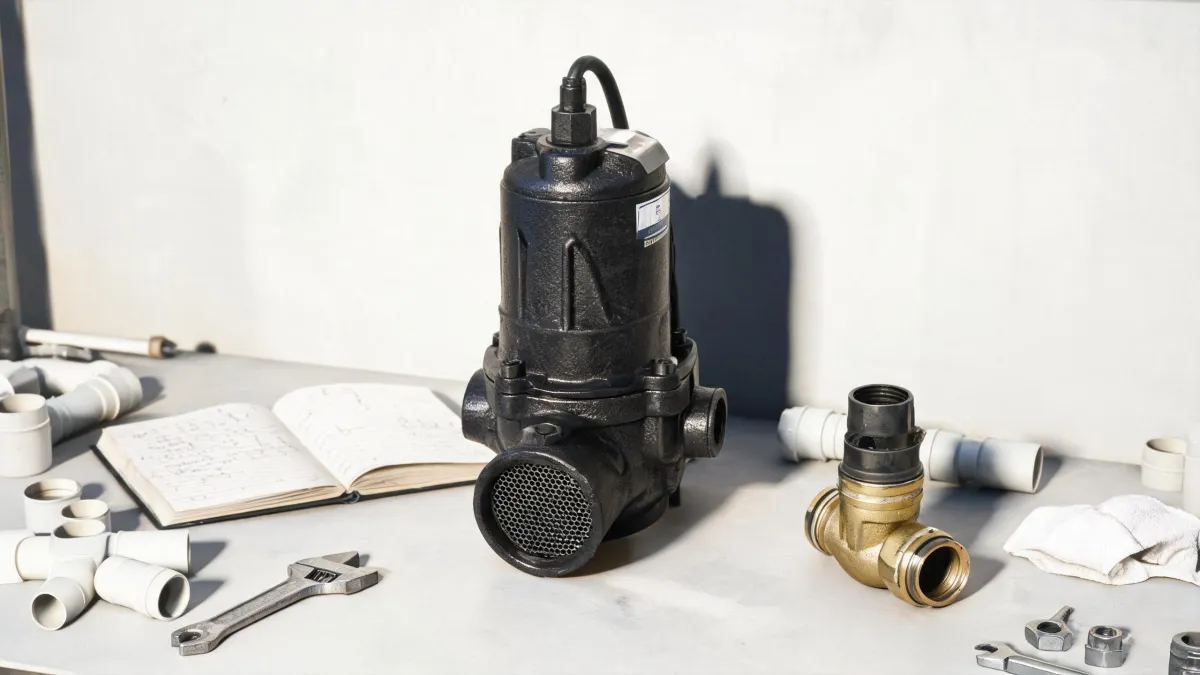
Take pump replacement switches. If you're looking at a Zoeller 004892 replacement switch for 50 and 90 series pumps, the genuine part runs about $60–90 depending on the channel. Aftermarket knockoffs on Amazon and eBay sell for $25–40. That looks like a no-brainer 50% savings.
We stocked those cheap switches on about 30% of our service trucks two years ago. I figured: if it works, why pay for the name?
Here's the thing—they do work. For about nine months. The genuine switch typically goes 3–5 years. The cheap versions fail inside a year, and they usually fail at the worst possible time—weekend call-outs, storm events, sump pits already filling with water.
Let me do the math. Genuine switch at $60–90, amortized over 5 years, is $12–18 per year of service. Cheap switch at $30, replaced annually, is $30 per year—plus the service tech's time to install it (we bill that at $85–120/hour, one-hour minimum), plus the risk premium. The most frustrating part: we kept seeing the same failure pattern repeat across three different trucks before we banned the cheap switches outright.
What finally made me switch everything back to genuine was one weekend in April 2024, when a customer's basement took on sewage because a $40 switch failed three months into its life. That callout plus water damage remediation ran north of $4,000. That's how I learned the lesson.
General rule I now apply: if the cost of a failed part exceeds 10% of the cost of getting it wrong after hours, pay for the good part.
Argument 2: Knowing Whether a Butterfly Valve Is Open or Closed Saves Real Money
This one's counterintuitive, and I'll admit I didn't fully appreciate it until we tracked labor hours by task for a full year.
Most butterfly valves have a stem-top indicator or a flat line on the stem that shows valve position. But indicators get painted over, corroded, or broken. If a tech spends twenty minutes with a wrench figuring out whether a valve is open or closed—that's twenty minutes of billable time on a diagnostic. Worse, if they guess wrong, they can isolate the wrong branch, dump pressure into a line that shouldn't have it, or shut down a system that was supposed to stay live.
How to tell if a butterfly valve is open or closed is honestly basic knowledge—look at the stem indicator, check the handle position, confirm against the system flow if in doubt. But it has to be trained. It has to be reinforced during walk-throughs. And it has to be documented so every tech on every truck does it the same way.
We started including butterfly valve position verification in our annual PM checklist in 2023. Our diagnostic time per service call dropped by roughly 12–15 minutes on average. Across 400+ calls a year, that's real labor savings.
The companion piece is knowing what you actually have in stock. If you can't quickly pull up the 40 series ball valve catalog specs (end connections, pressure ratings, seat material), you're guessing at replacements. We digitized our ball valve catalog by size and end connection in 2024. Our emergency purchase orders dropped from about 6 per month to 2. I want to say that saved us $1,800–2,400 quarterly, but honestly it might be more once you factor in avoided expedited freight.
The insight here: technical knowledge is a procurement tool. Techs who understand their components make fewer bad calls. Bad calls cost more than any unit price difference.
Argument 3: An Air Compressor Parts List Is Just PM Discipline in Disguise
I know an air compressor parts list looks disconnected from Zoeller Flow-Mate automatic pumps or replacement switches. But stick with me—they're the same problem in different packaging.
A few years back, we didn't have a documented air compressor parts list. Every time we needed a filter, separator, or unloader valve, someone had to re-research the model number. Sometimes we'd buy from the wrong vendor, wait two weeks, and find out the part didn't fit. That's a waste of an hour that nobody tracked.
After the third time this happened in six months, I was ready to just throw money at the problem. What actually helped was building a simple, shared parts list—part number, spec, preferred vendor, typical lead time—for every compressor in our shop and field kits.
Once that existed, the same logic spread to our pumps. We created parts lists for every Zoeller sump, sewage, and effluent pump we routinely service. Now when a tech needs a float switch or a check valve, they pull a part number, not a guess. Average order accuracy went from about 82% to 96%—I say 96%, though I might be misremembering whether that was before or after we added the backup pump line.
The pattern is consistent: the cost of not knowing your parts is always more than the cost of the part.
Where the "Buy Cheap" Argument Actually Holds
I know what you're thinking: sometimes the cheap part is fine. And you're right—in specific cases.
Low-risk, non-critical, easily observable components can be sourced on price. Air filters. Cosmetic fittings. Non-wetted hardware. I'm not arguing for OEM everything.
What I'm arguing for is a risk-weighted decision. Before you buy the cheap option, ask:
- What happens if this fails at 2 AM on a Sunday?
- Does this void the manufacturer's warranty on the surrounding system?
- How long does it take to replace, including truck roll and diagnosis?
- Have we bought this exact cheap part before, and how did it go?
If the answer to the first question is "someone calls us and we send a truck," buy cheap. If the answer involves water damage, sewage, voided warranty, or a callback on our dime—buy right.
Most procurement teams skip this analysis entirely. They compare prices and move on. Then they're surprised when the service team's labor budget is over.
What Six Years of Tracking Taught Me
It took me three years and about 150 parts orders to fully accept this. I went back and forth between the cheapest vendor and our OEM supplier for two straight weeks on one contract. The cheap vendor was 22% under on unit price. My gut said something was off. I ignored it, went cheap, and six months later we were eating a $2,200 rework bill when the cheap parts failed on a commercial job.
The data doesn't lie. Once you start tracking true cost per part—including failure rates, labor, and downstream consequences—the ranking flips. Suddenly the "expensive" option is the cheap one.
So here's my position, stated plainly: buy the part that holds up, not the part that prices lowest. Put the savings into competent specs, a real parts catalog, and technicians who know how to tell a butterfly valve is open without guessing.
Your 2 AM self will thank you.

Leave a Reply