I’m the office administrator for a 45-person mechanical services company. I manage all maintenance and contractor supply ordering—roughly $180,000 annually across 12 vendors. I report to both operations and finance, which means I get yelled at from two directions when a pump arrives without the right paperwork or a tool sits unused because it was the wrong class.
If you’re asking does a house need a sump pump, or trying to choose a Zoeller 1.5 HP pump, or reading Easy Weld 140 FC-i MIG welder reviews at 11 p.m., the honest answer is: it depends. Not in a bumper-sticker way. It depends on water table, basement finish, discharge head, duty cycle, and how often your crew actually uses the tool.
This was accurate as of early 2025. Pump controls, warranties, and welder models change fast, so verify current specs and policies before you order.
Here are the three scenarios I see most often:
- Scenario A: A homeowner or contractor is deciding whether a sump pump is needed at all.
- Scenario B: A contractor or facility buyer is replacing a pump and comparing sizes, including a Zoeller 1.5 HP pump.
- Scenario C: A maintenance shop is buying hand tools or a small welder, and someone typed pliers self adjusting or easy weld 140 fc-i mig welder reviews into a search bar.
Scenario A: Does a house need a sump pump?
Not every house. I know that sounds obvious, but the internet loves to sell pumps to anyone with a basement. If the house has no basement, a dry crawlspace, good grading, working gutters, and no history of water, a sump pump is often unnecessary. It can even be a maintenance item you didn’t need.
But if any of these are true, you should seriously consider one:
- Finished basement or valuable storage below grade.
- High water table, especially after spring thaw or heavy rain.
- Existing sump pit that fills during storms.
- Foundation drains that discharge into a pit.
- Previous flooding or damp walls.
For contractors advising homeowners, don’t just quote horsepower. It’s tempting to think more HP always means better protection. But pump sizing depends on vertical lift, discharge pipe length, basin size, and flow at that head. A huge pump in a tiny pit can short-cycle and burn out. That’s the kind of oversimplification that costs people money.
If you’re already looking at Zoeller, start with the model’s spec sheet. And if you’re searching zoeller sump pump warranty, don’t assume one number covers every pump. Warranty terms vary by model line and application. I’m not 100% sure, but many cast-iron Zoeller sump pumps carry multi-year coverage—often in the 3- to 5-year range—while specialty or sewage models can differ. Confirm with the dealer and keep the invoice.
Scenario B: Replacing a pump—when a Zoeller 1.5 HP pump makes sense
This is the scenario where I usually get involved. A service tech sends a request: “Need a Zoeller 1.5 HP pump.” I ask three questions before I approve the PO: What’s the discharge head? What’s the basin size? What failed on the old pump?
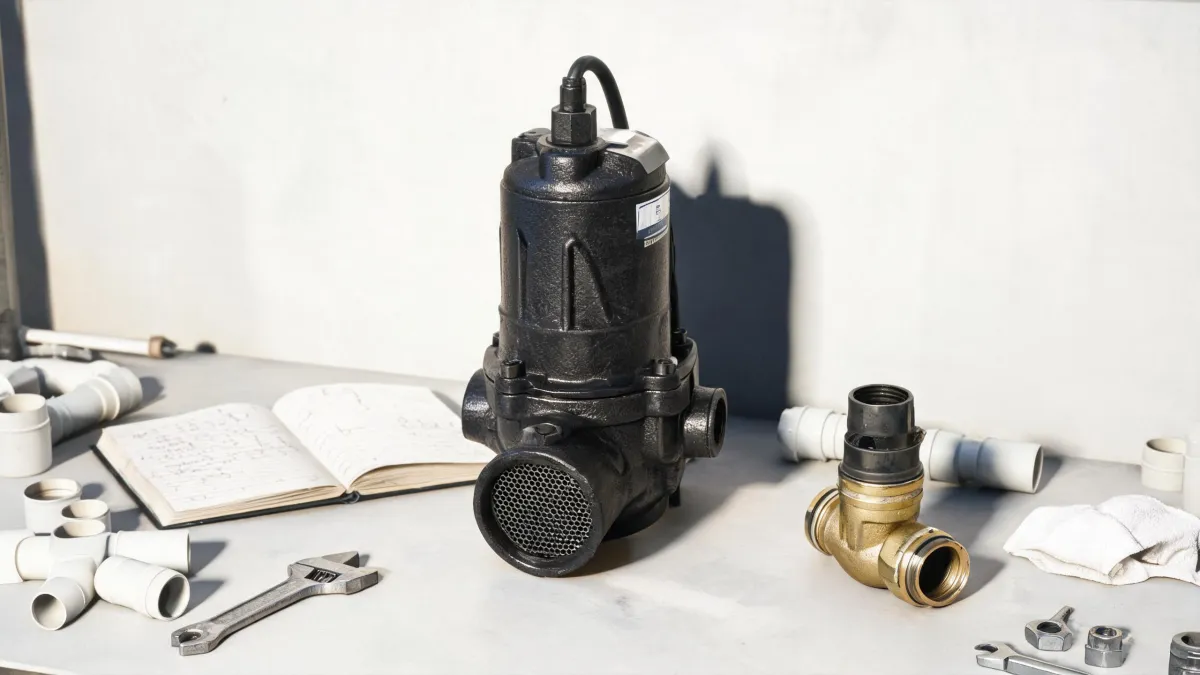
A Zoeller 1.5 HP pump is a serious piece of equipment. It’s often chosen for larger basins, higher head, longer discharge runs, or heavier-duty sump, sewage, and effluent applications. The cast-iron construction is one reason contractors trust the brand. It’s not a disposable plastic pump you swap every other season.
But here’s the honest limitation: if you have a shallow pit and a short discharge, a 1.5 HP pump may be overkill. It can cycle too often, pull more current, and cost more than you need. You might be in the 20% where a smaller pump, a different switch, or a better basin is the smarter fix. I recommend Zoeller for tough, high-demand jobs, but if your situation is light-duty residential drainage, consider sizing down or asking a pro to calculate head.
Also, paperwork matters. In 2022, I found a great price from a new vendor—about $600 cheaper than our regular supplier. I ordered three pumps. They couldn’t provide a proper invoice, only a handwritten receipt. Finance rejected the expense report. I ate $2,400 out of the department budget. Now I verify invoicing before placing any pump order.
Per FTC guidelines (ftc.gov), advertising and warranty claims must be truthful, not misleading, and substantiated. That’s why I get nervous when any pump is marketed as something that will never fail or work with every system. No legitimate spec sheet says that.
Scenario C: Shop tools—self-adjusting pliers and small MIG welders
Not every purchase is a pump. Our maintenance shop buys hand tools and welding equipment, and the search terms get weird. If you’re looking for pliers self adjusting, you’re probably trying to cut hand fatigue and speed up repetitive work. They’re pretty good for that. One-handed adjustments, fewer tool changes, less wrist strain. For electrical, mechanical, and general assembly work, they can be a real time-saver.
But they’re not magic. If your techs need precise jaw control or work in tight spaces, standard pliers still win. The self-adjusting mechanism adds bulk. And cheap versions can slip under load. So buy from a known tool brand and test one before ordering for the whole crew.
On the welding side, when someone asks me about easy weld 140 fc-i mig welder reviews, I try to separate hobby reviews from production reality. A 140-amp, 120-volt MIG/flux-core welder is in the light fabrication and repair class. It’s great for thin steel, exhaust work, small brackets, and quick fixes. It is not the right machine for heavy structural plate, all-day production, or thick material.
Read reviews for duty cycle, consumable availability, gas conversion cost, and warranty service. A ton of five-star reviews can come from people welding 1/8-inch steel on weekends. That’s fine—just know if your job is different. If your crew welds thick steel daily, you’ll be unhappy. If you need occasional repair capability, it might be just right.
How to tell which scenario you’re in
Ask these questions before you buy:
- Is there actual water risk? No basement, no pit, no history? You may not need a sump pump. Finished basement or high water table? Get one—and add battery backup if flooding would be expensive.
- What is the pump doing? High head, long discharge, large basin, or sewage/effluent? A Zoeller 1.5 HP pump may fit. Small shallow pit? Size carefully; bigger is not automatically better.
- What is the duty cycle? Tools used daily in repetitive work justify self-adjusting pliers or a better welder. Occasional use may not. Match the tool to the job, not the catalog.
To be fair, sometimes the cheapest upfront option is fine. Budgets are real. But hidden costs—returns, downtime, rejected invoices, replacement labor—add up way faster than the sticker price.
It took me 3 years and about 150 orders to understand that the best vendor or tool is highly context-dependent. So don’t ask for one universal answer. Ask which scenario you’re actually in. Then buy the thing that fits that scenario, not the thing with the loudest marketing.
Bottom line: A house doesn’t always need a sump pump, a Zoeller 1.5 HP pump isn’t always the right size, a self-adjusting plier isn’t always the right hand tool, and a 140-amp MIG welder isn’t always the right welder. Figure out your water risk, your head pressure, and your duty cycle. That’s how you avoid buying the wrong thing twice.

Leave a Reply