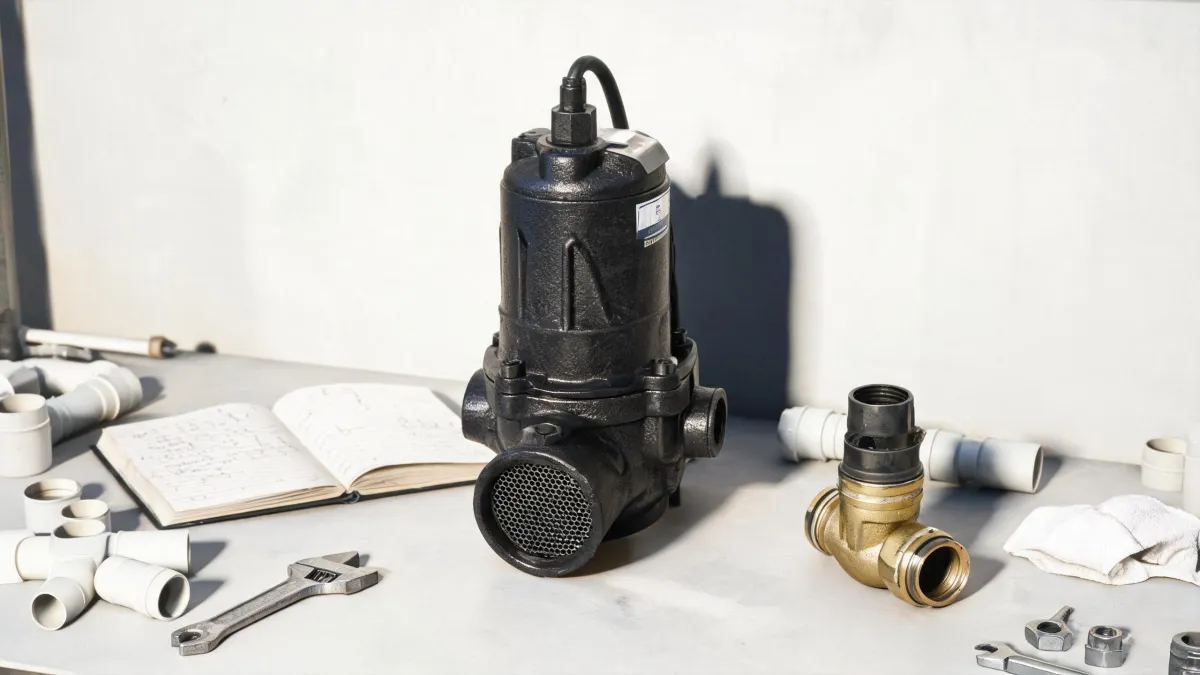
If your Zoeller sump pump is running constantly, won't turn off, or won't start, check the float switch position before you order a new pump. On standard 120-volt Zoeller models, that's a 30-minute inspection that can save a $250–$450 emergency service call. I've watched contractors swap perfectly good pumps because nobody looked at a tether float hanging on the side of the basin. That's not a pump failure. That's a setup failure.
I'm not a plumber. I'm the person who signs the invoices, so I see the difference between a real repair and an expensive lesson. I manage equipment buying for a 14-person water restoration company, and I've tracked every tool and pump order for over six years. Our service fleet currently runs fourteen Zoeller pumps, mostly M53 and M98 models. I don't claim to know every electrical detail, but I know what our repair orders cost.
Zoeller Sump Pump Float Switch Adjustment: What I Tell Our Technicians
Here's the mental model. The float switch tells the pump when to run. If it can't travel far enough, the pump runs forever. If it travels too far, the pump cycles too often. If it catches on a basin seam or discharge pipe, the pump stops dead. Most bad pump calls are actually bad float geometry.
For a tethered float switch, the adjustment is usually simple:
- Kill power at the outlet or breaker, then unplug the pump.
- Pull the pump assembly and inspect where the float cord is attached.
- Loosen the clamp or retainer, slide the float cord to change its range, and retighten.
- Make sure the float hangs free, with no pipe, liner, or pump cord blocking its swing.
- Plug everything back in and pour water into the basin to test both the turn-on and turn-off points.
If your model has a vertical float switch instead of a tether, inspect the rod and mounting bracket. The goal is the same: the switch needs a clean, consistent path. If the float itself has water inside, don't bother adjusting it. A cracked float is a replacement, not a repair.
That last line matters. One of our techs once spent 45 minutes adjusting a float that was already done. The repair order shows $168 in labor, and the real answer was a $45 switch. I don't have hard data on how often that happens across the industry, but my sense is that it's more common than anyone wants to admit.
Zoeller Pump Louisville KY: Why the Source Matters
Zoeller Pump Company has been based in Louisville, KY since it started in 1939. That history matters when you're trying to get a part quickly. If you're near Louisville, you could walk into a local plumbing supply house and get a replacement switch or pump component the same day. For the rest of us, the model tag is the most important thing on the pump.
Before you call anyone, photograph the model tag. I can't count the times a technician asked for a Zoeller pump part and the distributor needed the serial number and float type. That one step saves a second service visit. When someone searches Zoeller pump Louisville KY, the real value isn't just the brand or the zip code. It's being able to identify the exact product revision.
I also call the local Zoeller rep when a new install doesn't behave like the old one. Usually the float switch has changed slightly. That's not a flaw; it's a manufacturing revision. Knowing that prevents me from ordering the wrong part.
Total Cost Thinking: The Part Most People Skip
A float switch adjustment is the perfect example of total cost of ownership. The switch might cost $45. The service call to replace it might be $300. But the emergency pump failure that happens because you ignored a float problem can cost thousands in basement cleanup. That's not an exaggeration; it's a risk calculation.
I built a little cost tracker after getting burned on hidden fees twice. Now every repair order lists three numbers: parts, labor, and what we missed. The third column is where float switches show up. A pump that cycles too often wears out a check valve faster. A pump that never turns off runs up electricity costs. A pump that won't start becomes a flood. All of those are TCO problems, not just parts problems.
My experience is based on about sixty pump-related orders over six years, mostly for residential-style sump pumps. If you're working with commercial sewage pumps or grinder systems, your risk profile is different. The adjustment checklist stays the same, but the stakes are higher.
Tool Decisions That Sneak Into the Pump Budget
Once the float switch is working, the next question is usually tools. Our techs ask for the same three things every season: a jigsaw for cutting basin covers, a welder cover that doesn't fall apart, and an impact wrench when a check valve is seized. I handle all three with the same TCO logic.
A Quick Jigsaw Review for Pump Work
This isn't a general jigsaw review, but for sump basin access covers, here's the one-line version: buy a variable-speed jigsaw and use a 10-TPI blade. The tool brand matters less than the blade and the ability to control speed. We've used a $100-class jigsaw for four years. A cheap one died in the middle of a job, which cost us more in wasted time than the tool itself.
I don't have laboratory cut tests. I have a drawer of broken tools, and that's enough evidence for me.
The Welder Cover Lesson
On a welder cover, I learned the hard way that universal covers are usually made for lawn mowers, not welders. Our first cover warped after one job because it sat near an exhaust vent. The replacement cost $85, but the real cost was the time spent finding out the first one was wrong. If a welder sits inside a trailer, a heavy-duty tarp and bungees are probably fine. If it lives outside, get a cover with real UV and heat ratings. Per FTC advertising guidelines (ftc.gov), a claim like heavy-duty needs to be substantiated. I treat vendor labels as claims, not facts.
Where to Rent an Impact Wrench
Where to rent an impact wrench? In our area, Home Depot, Lowe's, and local equipment rental shops all carry them. A four-hour rental usually runs $50-$60 in our market; a daily rate is around $70-$90. A new cordless impact wrench from a known brand runs $180-$250. If you need it for one stuck check valve, rent it. If you need it more than three times a year, buy it.
That sounds obvious, but I still see contractors rent tools for jobs that require them regularly. The rental habit is sometimes a mental shortcut, not a cost decision. We use a simple rule: if a tool gets used on three separate job sites, it stops being a rental item.
When Not to Adjust: Honest Boundaries
I don't want this to sound like a never-call-a-pro sermon. If you aren't comfortable working around electricity, don't open a sump pump basin. Call a licensed electrician or plumber. If the pump runs but doesn't clear the basin, the problem might be a clogged impeller, a stuck check valve, or a broken discharge line, not the float. And if the pump is over ten years old with a corroded housing, replacement is probably the right move even if the float is fine.
One more thing: my numbers come from our market. Your prices will be different. Don't tell a supplier that our rental rates or labor costs are national averages. They're not. They're our averages. Start with the float switch, photograph the model tag, calculate TCO, then decide. It's not glamorous. It's just cheaper.

Leave a Reply