The Brand Reputation Is Earned, Not Marketed
I've been reviewing pump specifications for almost a decade now. When I first started, I assumed brand loyalty among contractors was mostly habit—guys buying the same thing because their mentor bought it. I was wrong. After sitting through enough warranty claim reviews and failure analyses, I've come to a pretty firm conclusion: Zoeller earned its place in the trades the hard way, through specs that hold up when the water's rising.
This isn't a puff piece. I've rejected Zoeller deliveries before (rare, but it happens). What I want to cover here is what actually matters when you're evaluating their lineup—especially if you're comparing against Wayne or Liberty and trying to figure out where the real differences are.
What Zoeller Actually Makes (and Why It Matters)
Zoeller's product line breaks down into a few core categories that any contractor or facilities manager should understand:
- Sump pumps — the M-series (M53, M98, M137) dominates residential and light commercial sump applications
- Sewage pumps — the N-series handles solids-handling in residential and commercial wastewater
- Effluent pumps — designed for septic tank discharge and greywater, not raw sewage
- Battery backup systems — the Aquanot line, which I'll get into separately because there's a lot of confusion there
- Accessories — check valves, float switches, basins, and the fittings that actually make a system work
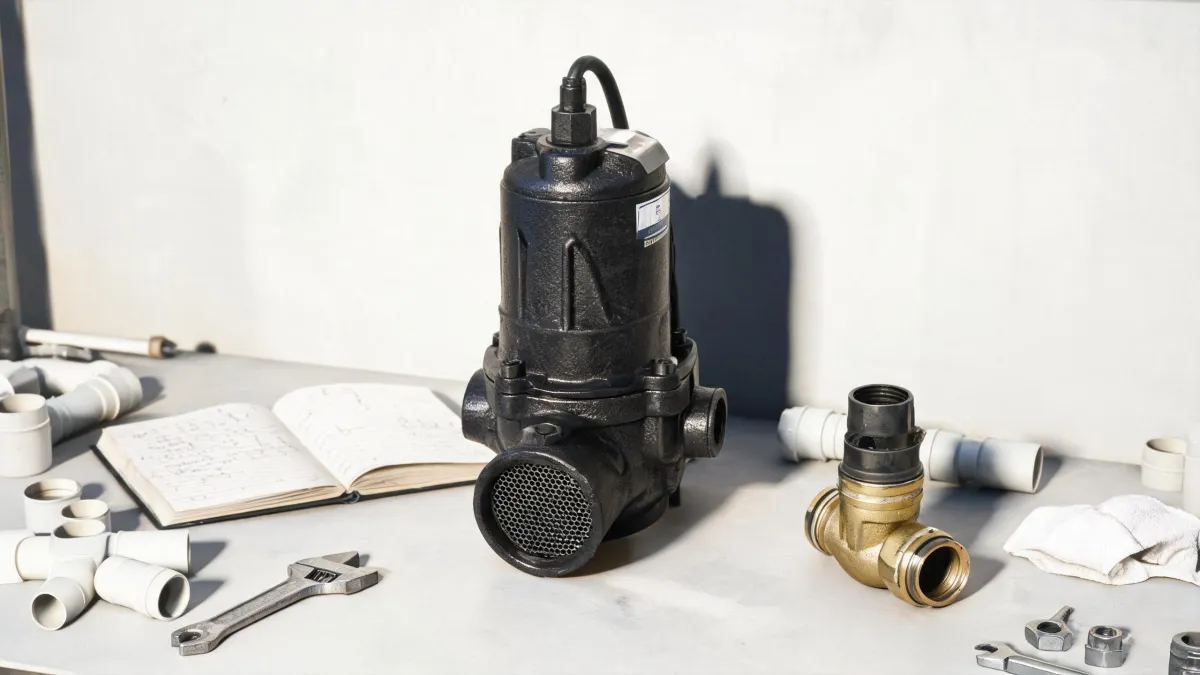
Here's the thing that separates Zoeller from a lot of competitors: they still cast their own iron housings. That's not marketing fluff. Cast iron dissipates heat better than thermoplastic, which means longer motor life in continuous-duty applications. It also means the pump is heavier, which some installers complain about—but heavier is what you want when a pump is sitting in a pit and you need it to stay put.
The M98 1/2 HP: Where Specs Meet Reality
The Zoeller M98 is probably the single most-specified pump in residential sump applications, and for good reason. Let me break down what the spec sheet actually tells you:
- 1/2 HP motor — this is the sweet spot for most residential sump pits. Enough power for a 10-15 foot head, not oversized to the point of short-cycling
- Cast iron housing and switch case — again, durability over cost
- Thermally protected motor — shuts down before it burns out if the pump runs dry
- Non-clog vortex impeller — passes small debris without jamming
- Vertical float or diaphragm switch options — this matters more than people realize
One thing I want to flag: the M98 is not a sewage pump. I've seen it specified in sewage applications more than once, and that's a mistake. It'll handle greywater and nuisance water, but solids will destroy the impeller. For sewage, you need the N-series.
"The spec sheet tells you what the pump can do in a lab. The install manual tells you what it can do in your pit. Read both."
Battery Backup: The Part Most People Get Wrong
If you're specifying a Zoeller sump pump, you should be thinking about backup. Power outages and sump failures don't coordinate their schedules. The Aquanot 508 and 508 ProSeries are the two most common battery backup systems I see specified, and the difference between them is worth understanding.
The standard 508 uses a 12V DC pump and a deep-cycle battery. The ProSeries adds a higher-capacity charger and better float control. In practice, the ProSeries is worth the extra cost if you're in an area with frequent outages—the standard unit can drain a battery in a few hours under continuous load, while the ProSeries will keep running longer.
Here's what I tell facilities managers: calculate your runtime based on your actual inflow rate, not the marketing spec. The box says "hours of runtime," but that's under ideal conditions. In a real storm with groundwater pushing in, you'll get less. Size accordingly.
Where Zoeller Doesn't Win
I'm not going to pretend Zoeller is the right answer for every application. Here's where I'd look elsewhere:
- Price-sensitive residential replacements — if you're swapping a pump in a rental property and the owner doesn't care about longevity, a lower-cost thermoplastic pump might make sense. You'll replace it sooner, but the upfront cost is lower
- Extremely tight pits — Zoeller's cast iron construction means bigger physical dimensions. If your pit is undersized, you may need a different form factor
- Specialty industrial applications — for high-temperature or chemical-resistant needs, you're looking at a different class of pump entirely
I can only speak to what I've seen in residential and light commercial applications. If you're dealing with municipal or heavy industrial specs, there are probably factors I'm not aware of—talk to an applications engineer.
The Bottom Line
Zoeller doesn't win on price. They don't win on being the lightest or the smallest. They win on the thing that actually matters in a pump: it's still running when you need it to be.
If you're specifying a sump or sewage pump and you've got the budget for a cast-iron unit, the M98 and its siblings should be on your shortlist. Not because of brand loyalty—because the specs back it up. And if you're comparing against another brand, compare the iron content, the switch type, and the warranty terms. That's where the real differences live.
For pricing and current lead times, check with your local distributor (rates shift, and I don't want to quote you a number that's six months stale). The spec sheet is free. Use it.

Leave a Reply