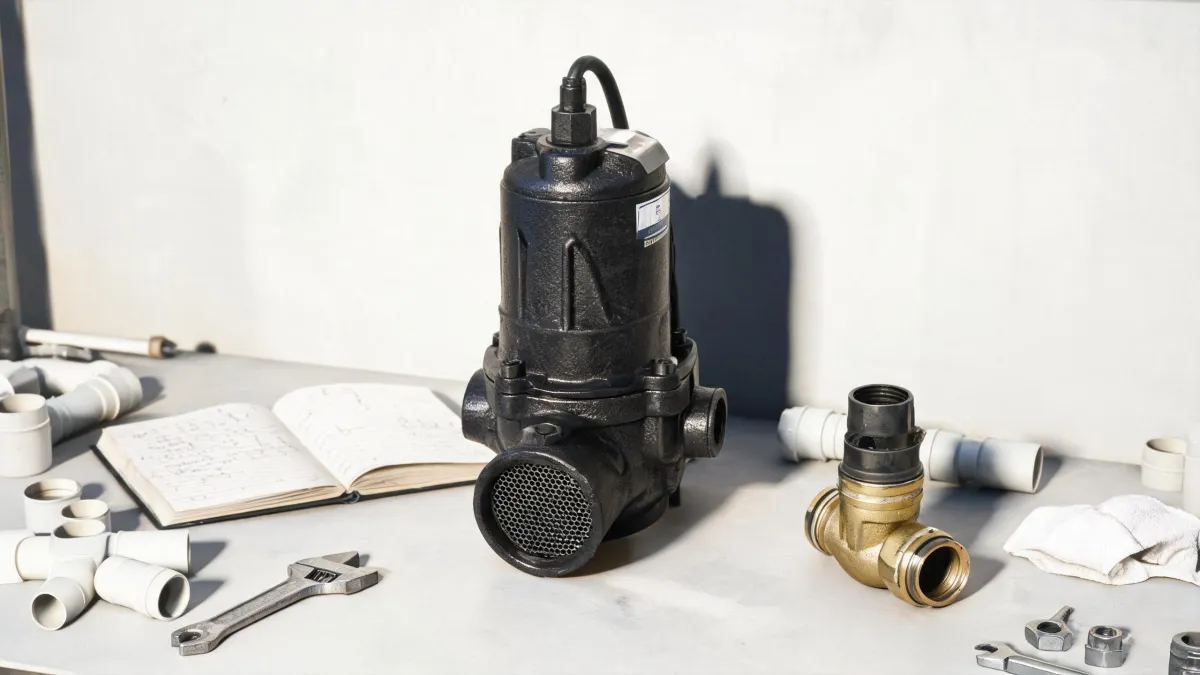
Three years ago, I couldn't tell a sump pump from a water heater. Now I handle purchasing for a 45-person company across two buildings—which means I've ordered more Zoeller pumps, hydraulic repair kits, and pneumatic tool oil than I ever planned on. This FAQ started as a list of questions our maintenance crew kept asking me. Here are the answers, in the order they actually matter.
- Why is my sump pump so loud all of a sudden?
- What does the reset button on a Zoeller sump pump do?
- Is the Zoeller 0.75 HP cast iron submersible sump pump worth the premium?
- What is pneumatic tool oil PC0101 used for?
- When do I need a hydraulic pump repair kit?
- Why do contractors keep asking for Zoeller?
Why Is My Sump Pump So Loud All of a Sudden?
First thing: sump pumps are never silent, but they shouldn't be loud either. If yours went from background hum to grinding noise overnight, something changed. The usual culprits:
- Debris in the basin. Rocks, gravel, a lost screw, even a rag that fell behind a washing machine—anything near the intake can rattle around.
- Check valve thumping. That "bang" when the pump stops is usually a failing check valve or a discharge pipe that's not secured.
- Worn impeller or bearings. This happens more in pumps 5–7 years old, especially plastic-bodied ones that run hot.
- Air lock. Trapped air in the discharge line can make the pump run rough. Usually temporary.
- Loose discharge pipe. A pipe knocking against the basin wall during cycling can sound terrible.
Here's where I made a $289 mistake once. Our maintenance guy said, "Pump sounds loud." I heard "order a new one." We were using the same words but meaning different things—he meant "something's rattling, come look." The fix was cleaning out the basin and resecuring the pipe. Investigate before you replace. That's the whole lesson.
One more tip: if you have a Zoeller and it suddenly gets loud, listen for where the noise comes from. If it's the switch clicking repeatedly, the float may be catching on the basin wall. If it's a grinding sound from the base, shut it off and check the inlet for debris. If it still growls, call a plumber before the next storm.
What Does the Reset Button on a Zoeller Sump Pump Do?
That red button on the motor housing is the thermal overload reset. When the motor gets too hot, an internal trip cuts the power before the winding melts. You press the button, and the pump starts again.
Simple enough. But here's the thing: the reset button is a symptom indicator, not a solution. Pressing it five times a week doesn't fix anything—it's telling you the pump is working too hard.
Common reasons the reset button on a Zoeller trips:
- A stuck or failing float switch that leaves the pump running continuously
- A clogged inlet that restricts water flow
- An undersized pump for the amount of water coming in
- A check valve failure that makes the pump short-cycle
Here's something vendors won't tell you: a pump that keeps tripping its thermal protection is slowly damaging itself. Resetting it saves the motor from immediate burnout. It doesn't fix the cause. In my experience, if you're resetting a Zoeller more than once a week, call a contractor—because a simple float adjustment might be all you need.
Is the Zoeller 0.75 HP Cast Iron Submersible Sump Pump Worth It?
This is the pump contractors ask me for by name—the Zoeller 0.75 HP cast iron submersible sump pump, a model that's been a workhorse for decades. It costs more than the plastic special at the big box store. So, worth it?
From the outside, it looks like any pump: a cylinder that moves water from point A to point B. The reality is inside. Cast iron construction handles heat better than plastic and doesn't crack in cold conditions. The motor is built for a harder duty cycle. And the switches are replaceable—which matters more than you'd think.
Price reference: A Zoeller 0.75 HP cast iron submersible typically lists between $200 and $350 depending on switch type and distributor (based on publicly listed plumbing supply prices, June 2025; verify current pricing). A basic plastic submersible runs $80–$150 (Source: major online retailer listings, June 2025).
I still kick myself for the time I let a maintenance coordinator talk me into a budget pump to "save" the company $120. It failed in 14 months. The cleanup and emergency service cost us about $900. The replacement was the Zoeller I should've bought first. I don't make that mistake anymore.
Look, I'm not saying every application needs a 0.75 HP cast iron pump. Light-duty residential backup? Maybe a smaller pump is fine. But for a basement that floods, a rental property, or a commercial facility—the premium is worth it. The math is simple: the cost of the pump divided by the years it runs is usually cheaper with cast iron.
What Is Pneumatic Tool Oil PC0101 Used For?
PC0101 is a specific SKU for pneumatic tool oil—the lightweight oil you add to air-powered tools (like nail guns, impact wrenches, and riveters) to keep their internal vanes and moving parts coated and protected.
I get asked this a lot because people find the part number in a maintenance closet and have no idea what it's for. If you're running air tools off a compressor, you add a few drops to the tool's air inlet before and after use. It does two jobs: lubricates the moving parts and helps push moisture out before it corrodes the tool.
Can you use a generic, non-detergent ISO 32 pneumatic oil instead? Probably. But PC0101 is sized right and formulated for this, and a bottle lasts a long time. Compared to a $300 impact wrench, the oil is cheap insurance.
What most people don't realize: most air tool failures come from running them dry, not from wear. Two drops of oil can extend a tool's life by years. It's the same logic as pump maintenance—small, boring steps prevent expensive, exciting failures.
When Do I Need a Hydraulic Pump Repair Kit?
A hydraulic pump repair kit—sometimes called a reseal kit—includes the O-rings, seals, gaskets, and springs you need to recondition a hydraulic pump that's leaking or losing pressure. These are common for equipment like floor jacks, lift platforms, log splitters, and some industrial plumbing pumps.
When should you rebuild instead of replace? My rule: if a repair kit exists for the exact model, try the rebuild first—as long as the cylinder walls aren't scored and the shaft isn't bent. A kit might run $40 to $120 depending on the pump. A new pump could be $200 to $800+. Rebuilding is the cost-first choice.
I'm not 100% sure on every model, and I don't pretend to be a technician. But here's the judgment call I've watched our maintenance manager make for years: if the pump's only problem is leaks and worn seals, reseal it. If there's internal metal damage, don't throw good money at it.
One caution: if your hydraulic oil looks milky or contaminated, the repair kit isn't the root issue. You've got a contaminated fluid problem. Fix that first, or you'll be rebuilding again in 12 months. Don't ask me how I know.
Why Do Contractors Keep Asking for Zoeller?
After a couple years of managing pump orders, I've watched who asks for what. Contractors don't switch pump brands without a reason. When a plumber or electrician specifies Zoeller, it's not because of a rebate. It's because they've seen what fails in the field.
Three things stand out from my buyer's seat:
- Dependability. Cast iron construction, thermal protection, and a design that handles heat. Fewer callbacks mean happier contractors and building owners.
- Parts availability. You can actually buy a replacement switch, check valve, or seal for a Zoeller. Some budget pumps are disposable—you can't repair them at all.
- Channel trust. Local plumbing supply houses stock Zoeller because they know the territory. If the supply house trusts a brand, I trust it too.
Here's the bigger lesson I've learned about quality and perception: when our tenants hear a pump making noise in the basement, or when a system fails and we're pulling up floors, the brand name on the failed part is what they remember. It says something about the building and the management. That's not vanity—that's the reality of running a facility.
So yes, the Zoeller 0.75 HP cast iron submersible pump is one of the most requested pumps in the industry. It earned its reputation by being dependable. And when you've seen the alternative play out in a flooded basement, "dependable" is worth more than the price difference.
That's the part that doesn't fit in a spec sheet.

Leave a Reply