-
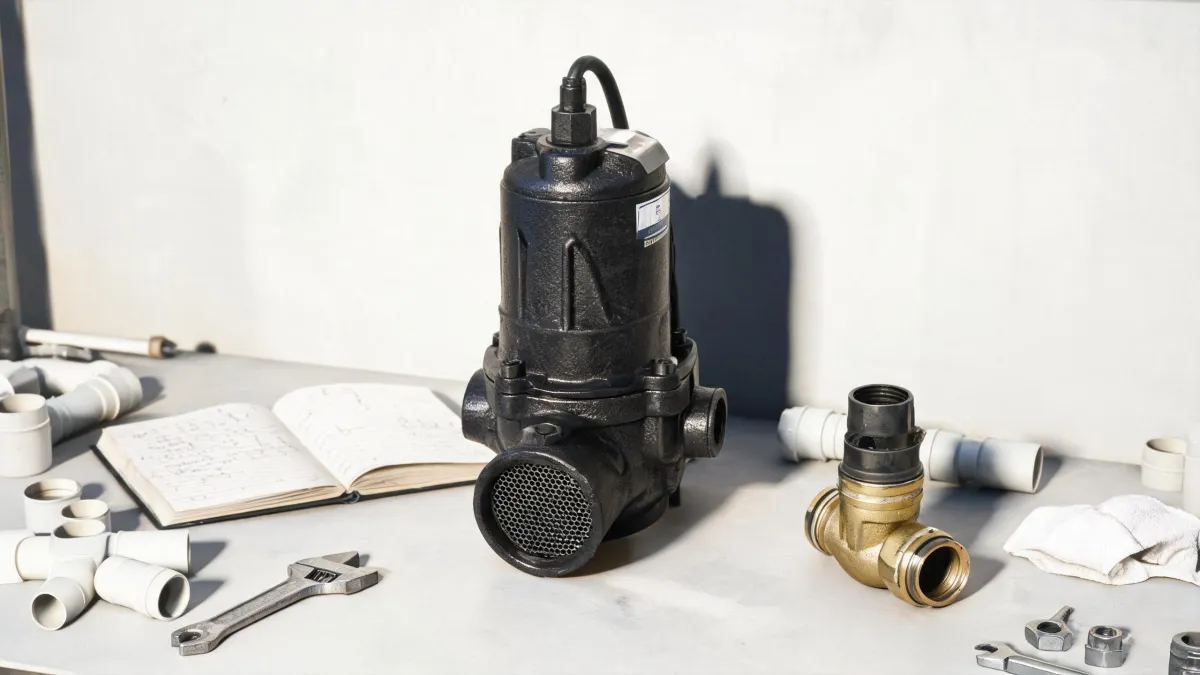
What are the Zoeller 1/3 HP submersible sump pump specs?
-
What does a centrifugal pump do?
-
Is the Zoeller premium cast iron submersible sump pump worth the premium?
-
Zoeller M53 vs M98: which one should I order?
-
What tools do you actually need for a sump pump replacement?
-
Can I use a lawn mower battery and charger for a Zoeller backup system?
-
How do I install a sump pump so it doesn't become a callback?
-
How do I make sure I'm getting a genuine Zoeller pump?
If you're here, odds are you're one of three people: a contractor tired of callbacks, a property manager standing in a damp basement, or someone told to "just get the good pump" and left to figure out what that means. I run purchasing for a facilities company and I've been ordering Zoeller pumps since 2020—roughly 60 to 80 orders a year across 28 commercial buildings. These are the questions I get asked, plus the answers I learned by ordering the wrong thing a few times.
What are the Zoeller 1/3 HP submersible sump pump specs?
I pulled these numbers from the current Zoeller M53 spec sheet (as of spring 2026), not from memory—memory has embarrassed me on specs before:
| Horsepower | 1/3 HP |
| Voltage / frequency | 115V, 60 Hz |
| Max flow at 0 ft | ~3,030 GPH |
| Shut-off head | ~17 ft |
| Discharge size | 1-1/2" NPT |
| Solids handling | 1/2" spherical |
| Casing material | Cast iron |
| Cord length | 9 ft |
| Thermal protection | Yes, auto-reset |
The number people overlook isn't the max flow—it's the curve. 3,000 GPH at zero head sounds unstoppable, but real installs have a 5-, 10-, or 15-foot lift. The M53 still pushes about 1,800 GPH at 10 feet, which is better than the 1/4 HP units we used in 2021 and, not coincidentally, why they got retired. Also worth knowing: the motor has built-in thermal overload protection. A jammed float switch won't automatically cook the pump.
What does a centrifugal pump do?
A centrifugal pump uses a spinning impeller—a disc with curved vanes—that throws water outward from the center inlet. The water enters at the eye, gains velocity from the vanes, and flows into the volute, a spiral chamber that converts velocity into pressure at the discharge. The same spinning motion creates low pressure at the eye, so more water keeps getting pulled in. It's a continuous cycle, not a one-time push.
It's tempting to blame the pump when water stops draining, but the impeller is rarely the weak link. Most "dead" pumps our team pulls out start right up when they're bench-tested. The culprit is usually the float switch, a tripped GFCI, or corroded wiring. The centrifugal pump itself is the most reliable part of the system, which is why the design has survived for decades.
Is the Zoeller premium cast iron submersible sump pump worth the premium?
For commercial duty—yes, I won't hedge on that.
"Cast iron doesn't get tired."A veteran plumber told me that years ago, and it's exactly right. The cast iron housing absorbs motor heat and radiates it into the surrounding water, which keeps the sealed motor from cooking itself. It also holds its shape and keeps the seal ring intact under pressure, whereas cheaper plastic bodies can flex when the pump cycles hard and hot.
I don't have industry-wide failure data—I'd be guessing if I gave you a percentage—but our maintenance log is clear. We standardized on the cast iron M53 for all replacement work in 2023, and our pump service calls dropped from roughly monthly to exactly one in the last 12 months. When you're paying for a service visit, the $50 difference between pump bodies is the cheapest insurance you can buy.
Zoeller M53 vs M98: which one should I order?
The M53 (1/3 HP) is our default. The M98 (1/2 HP) is the upgrade for deep pits or long discharge runs. Same cast iron platform, same family of parts, but the M98 moves about 30% more water at a 10-foot lift and offers a 2-inch discharge option for oversized plumbing.
Wholesale pricing puts the M98 roughly $30 to $50 higher, depending on the distributor, as of May 2026. I realize price varies and you should verify current quotes. When we had a below-grade parking garage that flooded twice in 2023, we stopped second-guessing and put M98s in. Two years, zero callbacks on that property. If you're a contractor, that's an easy spec to present to a client when the pit is deep.
What tools do you actually need for a sump pump replacement?
Here's the list I hand to every new maintenance hire: pipe wrench, hacksaw or PVC cutter, PVC primer and cement, a level, a multimeter, a flathead screwdriver, and a decent pair of pliers. If you're buying pliers for this job, skip the tiny 6-inch ones and get 10-inch pump pliers—they're the pair that actually lives in the pump bucket.
The tool that separates a clean install from a wasted afternoon is the multimeter. I've seen the same mistake play out up and down the contractor world: new pump dropped into a wet pit, no power, and the pump gets blamed. Tripped GFCI. If you check for voltage first, you save yourself the embarrassment of a bench test that fires right up after you've already changed out a perfectly fine pump.
Can I use a lawn mower battery and charger for a Zoeller backup system?
This question comes up in every forum, and I made the mistake myself in 2024. A 12V lawn mower battery can physically connect to the backup system. It will even move water, for a while. Then the float keeps cycling, the battery drains, and a battery built for short cranking bursts does not come back from a deep discharge the way a deep-cycle battery does. It's never the same after that.
The Zoeller backup system is engineered around a 12V deep-cycle or AGM battery. The charger is a smart controller that wants a specific charge profile and a battery capacity it can monitor. A mower battery doesn't fit that profile, and the run time is embarrassingly short when it really counts. I saved maybe $40 on a "compatible" battery and paid $500 in service labor after the first real outage. I do not recommend the shortcut—that's one lesson I'll happily save you from.
How do I install a sump pump so it doesn't become a callback?
Three hard-won rules:
- Install a check valve. Without it, the water in the discharge pipe drains back into the pit after every cycle, and the pump short-cycles until the float switch gives up.
- Keep the pump level on a solid base. A pump that's tilted on a gravel bottom cycles erratically and wears the switch mechanism unevenly. Concrete block or a purpose-made anti-vibration pad solves it.
- Test the cycle twice. Pour water in, confirm the pump starts, confirm the pit drains to the float cut-off, and let it run through a second cycle before you clean up.
The $25 check valve prevented a $600 callback on a client's finished basement in 2022. I spent that Saturday apologizing to a homeowner, and I've never skipped the valve since. The cheaper install saves money on paper and loses it in the field. Quality isn't my opinion—it's the entire reputation.
How do I make sure I'm getting a genuine Zoeller pump?
Buy through an authorized distributor. Zoeller sells through plumbing wholesalers and a network of independent hardware dealers, and the authorized channel is the only place I'll spend money now. In 2021, I thought I found a deal on a "grey market" pump through an online marketplace at 30% below wholesale. It ran for a month and then the switch failed. The authorized-channel pump we replaced it with has run for years—notice how the $70 saving became the most expensive part of that decision.
Check the nameplate and serial number before you accept the delivery, keep the invoice, and confirm the seller actually services their warranty locally. If the price is dramatically below every wholesaler you've called, that's not leverage. That's a red flag. (Note to self: those were the words I needed to hear in 2021.)

Leave a Reply