-
The surface problem: which Zoeller model?
-
The deeper problem: duty cycle, not horsepower
-
The Mighty Mate in a contractor's van
-
The legacy myth: "Any Zoeller pump will do"
-
Sump pump at Home Depot: convenient, but not a plan
-
The hidden costs most people skip
- Before you install: the two tools people forget
-
The solution: skip the guesswork
You're standing in the pump aisle at Home Depot, phone in one hand, spec sheet in the other. You see a Zoeller M98 and a Zoeller Mighty Mate sump pump next to each other. The M98 is bigger. The Mighty Mate is cheaper. You think the decision is about price.
It's not.
I run procurement for a small plumbing company—about 14 people, mostly residential service work. I've been buying pumps for six years and tracking every invoice in a simple spreadsheet. That spreadsheet changed how I look at sump pumps. Not just the brand or the HP, but the total cost of keeping a basement dry.
The surface problem: which Zoeller model?
Let's solve the obvious question first, because it's the one that sends most people to Google. What's the difference between the Zoeller M98 and the Mighty Mate?
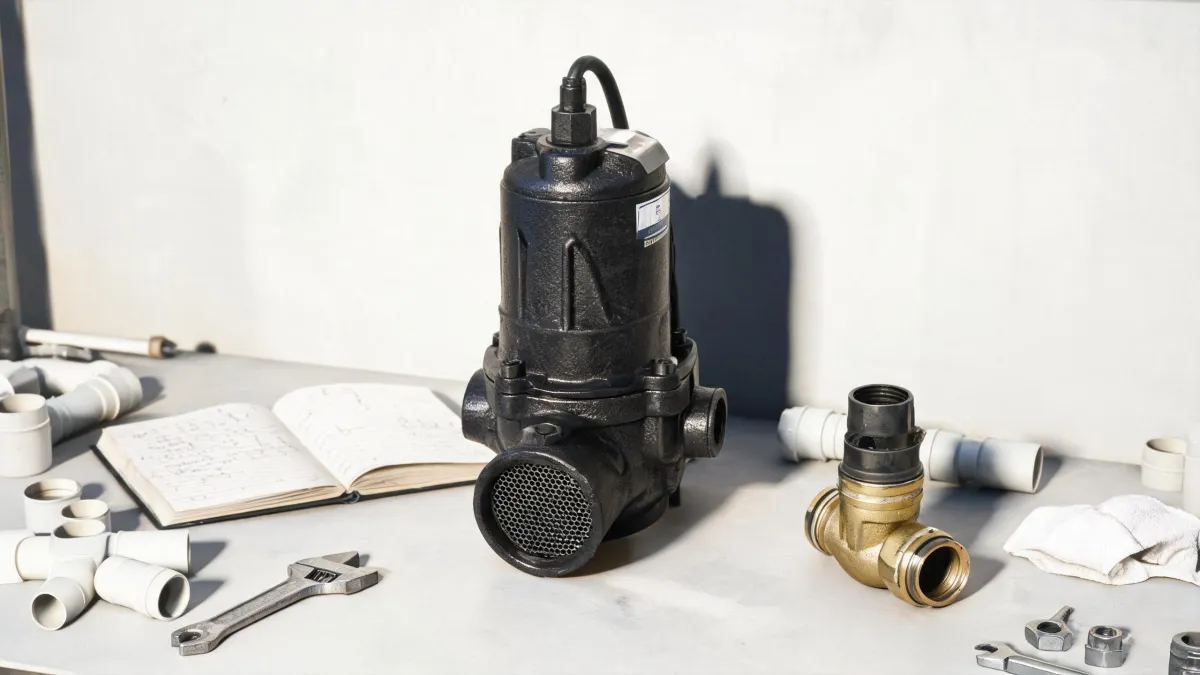
The Zoeller M98 is a 1/2 HP cast-iron submersible sump pump. It has the kind of build that survives an average household plus a few years of neglect. The Zoeller Mighty Mate sump pump is the more compact option—usually a 1/3 HP cast-iron pump in the same family. It's lighter, cheaper, and easier to handle in a tight basin.
But if you choose based on that alone, you're missing the real question.
The deeper problem: duty cycle, not horsepower
From the outside, a sump pump is a dumb appliance: water rises, switch closes, pump turns on. The reality is different. The pump has a duty cycle. It is designed to run a certain number of starts per hour, for a certain amount of time, at a certain flow. Choose a pump that's too small for the basin, and it runs longer, starts more often, and dies earlier. Then you pay for an emergency replacement at 7 p.m. on a Saturday.
That's the hidden cost no one puts on the shelf tag.
Why does this matter? Because the Mighty Mate is a great pump for a light basement. It is not a great pump for a high-flow drain system or a pump basin that collects water from three pits. The M98, with its 1/2 HP motor, handles a heavier load. But even the M98 has limits. If the pump is undersized for the fixture count, no cast-iron housing will save it.
So when you look up "zoeller m98 sump pump specifications," don't stop at HP. Look at the discharge size, the float switch type, the maximum head, and the flow at low head. Then compare that to your basin and your typical rainfall.
It took me four years and roughly 200 pump orders to understand that a pump's real spec is its total cost over its life, not its price tag.
The Mighty Mate in a contractor's van
I've also carried Mighty Mate pumps as a standby in the service van. That's what the name means to me: a manageable 1/3 HP pump you can run out to a standard sump and install in under an hour. For many homeowners, it's more than enough.
But there's a trap. You don't buy a Mighty Mate for a house that had two flooding events in a year. You buy it for the house with a dry sump, a backup system, and a low water table. If you're not sure which one you're working on, the M98 is the safer spec.
That's not a criticism of the Mighty Mate. It's a criticism of guessing. The model number doesn't tell you if the pump is right. The duty does.
The legacy myth: "Any Zoeller pump will do"
I still hear this from older contractors: "It's a Zoeller. It'll run forever." That was true in an era when houses had shallow groundwater and small sump pits. Today, with more finished basements, smarter drainage systems, and heavier storms, the demand on a pump is different. The cast iron is still the right call. The selection method shouldn't be.
This is what I mean by "the industry has evolved." What was best practice in 2015, when I started, isn't best practice now. You don't need to over-pump every basin. You need to match the pump to the actual load. Home Depot can help with that—if you bring the numbers.
My experience is based on residential service work in the Midwest. If you're dealing with a commercial basin or a storm-prone coastal area, your numbers will be different.
Sump pump at Home Depot: convenient, but not a plan
If you search "sump pump home depot," you'll get dozens of options. That's not a problem. The problem is making the aisle your strategy.
Home Depot has a huge advantage for an emergency: you can see the pump, hold it, and take it home the same day. Many locations carry Zoeller, and the M98 is often in stock. That's worth something when a basement is flooding.
For planned work, I don't let one store's inventory drive the spec. I check current prices in the Home Depot app, but I also compare against wholesale supply houses. I don't quote prices here because they change by region and season. The point is: the right channel depends on how fast you need it and how many pumps you buy in a year.
(Should mention: if you're buying for a single home, Home Depot is usually the easiest path. If you're buying for a business, open an account with a local distributor and keep Home Depot as your backup.)
The hidden costs most people skip
Let's talk about total cost, because that's my job.
A sump pump project isn't just the pump. It's the discharge pipe, the check valve, the float switch, the labor, and the occasional trip back when the job needs a different fitting. It's also the cost of failure: the carpet, the drywall, the family's stuff.
When I audit a past season, I see the same pattern: the cheap option creates a "redo" cost. That redo wipes out any savings. I'm not saying choose the most expensive pump. I'm saying calculate the total job, not the unit price.
Before you install: the two tools people forget
Several searches about pumps end up asking about the "torque wrench price Australia" and "how to take off an angle grinder blade." That seems random until you realize those are the tools on the bench when someone is cutting out an old pump or tightening a flanged connection.
A note on "torque wrench price Australia"
If you're looking up the torque wrench price Australia, you probably need one for the pump flange or the discharge pipe. My advice is simple: don't buy the cheapest torque wrench for a flooded basement job. A mid-range brand with clear Nm and ft-lb markings is enough. You also need to know the torque spec for your fittings. If the spec sheet doesn't say it, call the manufacturer before guessing.
I can't tell you the current price in AUD because that changes with exchange rates and retailer promotions. What I can tell you is that the cost of a proper tool is tiny compared to the cost of a stripped bolt or a leaking flange.
How to take off an angle grinder blade
This is one of those questions that seems too simple to ask, but it's smart to ask before you put power to a cutting wheel. The safe way to take off an angle grinder blade is:
- Unplug the grinder. Not turn it off—unplug it, or remove the battery.
- Lock the spindle with the spindle lock button. If your grinder does not have a spindle lock, follow the manufacturer's manual for that model—do not pin the blade by hand.
- Use the supplied wrench to loosen the flange nut. On many angle grinders, the flange nut is left-hand threaded, so you turn it clockwise to loosen when looking at the outside of the wheel. Check the wrench direction and lock button before forcing anything.
- Remove the outer flange and the old blade.
- Put the new blade on, replace the flange, and tighten firmly. Do not overtighten; you'll need to remove it someday.
That's the short version. I won't pretend it's a full safety course. If you've never used a grinder, watch a manufacturer's video first.
The solution: skip the guesswork
Here's what I'd do if I were in your shoes:
- Measure your sump basin diameter and depth first. That tells you which pump physically fits.
- Compare the Zoeller M98 specifications against the basin's expected input. If you're not sure, watch it through a heavy rain.
- Don't choose the Mighty Mate just because it's lighter. Choose it when the duty is light.
- Buy from Home Depot if you need it today. Buy from a distributor if you have time and want a better price.
- Install the pump with the right tools, including a torque wrench if the manufacturer calls for one.
This isn't sexy advice. It's the advice I wish someone gave me before I ordered a dozen pumps based on HP alone. The pump matters. The system matters more.
After five years of tracking invoices, I've come to believe that the best pump is the one that matches the basin, the duty, and the budget—in that order.

Leave a Reply