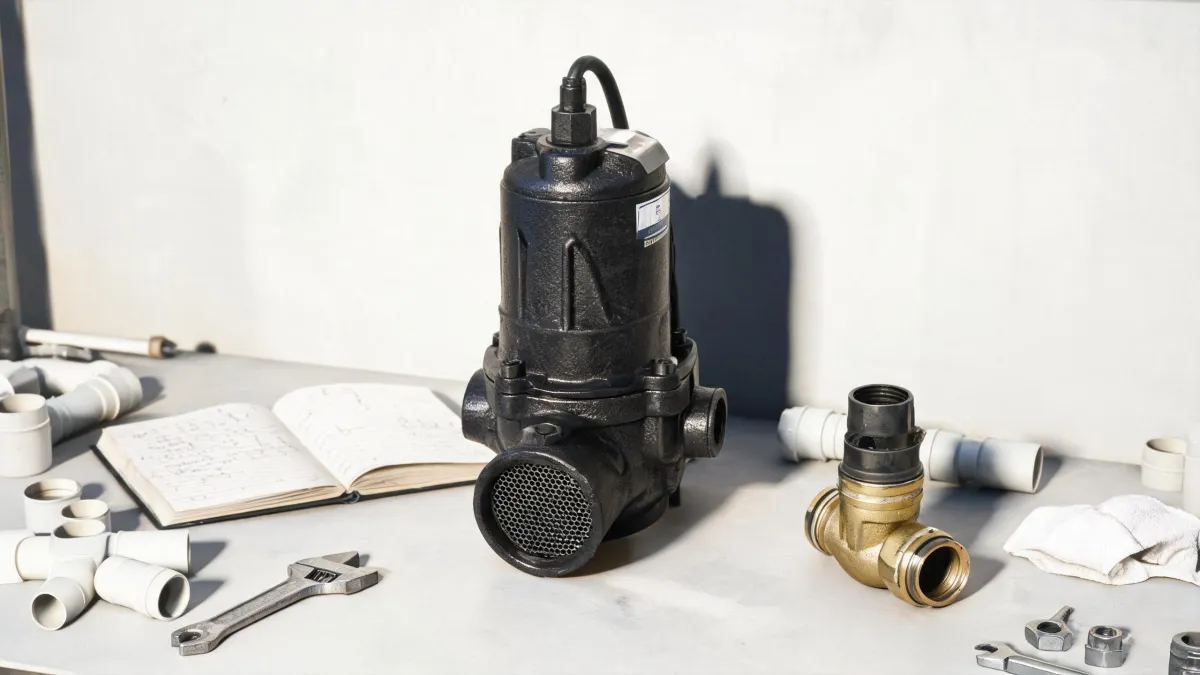
If you're asking whether to buy a Zoeller M137 sump pump or a Zoeller sewer sump pump, I can't give you one answer. Anyone who does is guessing. The right pump depends on what goes into the pit, how much head the system needs, and what a failure costs you.
Here's who I am: I manage procurement for an independent plumbing supply house. We stock pumps and the hand tools contractors ask for on the way out. I've tracked over $180,000 in orders across six years, negotiated with a pile of vendors, and built a cost-tracking spreadsheet that doesn't forget mistakes. I don't buy the cheapest line item; I buy the one with the lowest total cost of ownership (TCO, not sticker price).
So this guide uses the same logic I use when writing a purchase order: split the situation into scenarios, compare real costs, and don't settle for a one-size-fits-all recommendation.
- Scenario A: Clear ground water, no sewage → standard sump pump path, often the Zoeller M137 sump pump.
- Scenario B: Toilets, sinks, or washing machine drain into the pit → a Zoeller sewer sump pump, not a standard sump pump.
- Scenario C: Power outages are common → add a backup system before upgrading the primary pump.
The old rules aren't wrong, but they're incomplete. What was best practice in 2020 may not be best practice in 2026. Battery backups are smarter, float switches are more reliable, and online spec sheets make comparing pumps easier. The fundamentals haven't changed: cast iron still outlasts plastic in real service, and a pump that can't handle solids will fail in a sewage pit. But the execution has transformed.
Scenario A: Clear water and a wet basement
If the pit is collecting ground water and nothing else, you're looking at a standard sump pump. The Zoeller M137 sump pump is the model I get asked about most often. According to Zoeller's published specs (zoeller.com), it's built for sump applications, not solids handling. That distinction matters more than the horsepower sticker.
What I look for: cast-iron pump housing (not the discount plastic), a dependable automatic float switch, and easy access to the check valve. A check valve is cheap insurance. Skip it, and water falls back into the pit after every cycle, which makes the pump short-cycle. Short-cycling kills pumps faster than almost anything. Based on distributor quotes I pulled in Q2 2025, the M137 generally lands between $180 and $260, but verify current pricing before you order.
Now, the part I hate admitting: we stocked a plastic-housing pump once because a contractor wanted to save $40. Fourteen months later, the housing cracked. The replacement install plus the service call ran about four times the price difference. That's the definition of penny-wise and pound-foolish.
Scenario B: There's sewage or effluent in the pit
Then you're not shopping for a sump pump. You need a sewage pump. That's why people search for 'zoeller sewer sump pump' — they trust the brand, they know they need solids handling, but they aren't sure whether a standard pump will work.
Short answer: no.
A sewage pump has a larger impeller opening, a heavier motor, and oversized passage sizes to handle solids and stringy material. The M137 is not that pump. Using it in a sewage pit means clogs, overheating, and an emergency plumber call at the worst time.
In our inventory, the Zoeller sewage pumps we carry are cast-iron units with higher horsepower and a discharge size matched to the building's pipe. Before you order, check the model's solids-handling capacity. If the spec sheet doesn't list a solids size, assume it's not designed for sewage.
I went back and forth for two weeks on whether to stock both a 1/3 HP sump and a heavier sewage pump line. The cheaper short-term play was to under-stock the sewage pumps. Then a contractor called in the middle of a basement reno and needed one that day. We didn't have it. He drove forty minutes to a competitor. I learned the difference between inventory cost and lost-sale cost the hard way.
Scenario C: Power outages and backups
If the power goes out with every storm, spend money on a backup system before you upgrade to a fancier primary pump. Look for a battery backup pump or an inverter system sized to run the existing pump.
Some newer backup systems have alarms and controller boards you can set from your phone. That's a real change from the old 'car battery and inverter' setup. But the basics haven't changed: batteries age, charging contacts corrode, and a backup that never gets tested will fail when you need it. Put a test date on the calendar. A backup pump is not a 'set it and forget it' product. Per FTC advertising guidelines (ftc.gov), claims like 'never have a flooded basement' have to be substantiated. I haven't found a pump that earns that label. Every pump can fail. Every one.
The tool side of the order: three quick scenarios
Pumps aren't the only place where a simple question hides a more specific one. I hear the same pattern when contractors ask about grinding wheels, chainsaw chains, and pliers. Here's the short version.
How to choose a grinding wheel
The question 'how to choose a grinding wheel' has a practical answer: match the abrasive to the material. Aluminum oxide wheels are the standard choice for steel and general shop work. Silicon carbide wheels work better on masonry, stone, and non-ferrous materials. Zirconia-alumina wheels hold up under higher pressure and run cooler. Then check the wheel diameter, thickness, arbor hole, and maximum RPM. A grinding wheel rated for too low a speed can come apart. That's not the place to save $4. Seriously. (note to self: always confirm the RPM rating before recommending a substitute.)
10 inch chainsaw chain? Not so fast
Calling in a 10 inch chainsaw chain order is not enough. A 10-inch bar can take different chains depending on pitch, gauge, and drive link count. We didn't have a formal chain compatibility chart when I started here. The third time someone returned the wrong chain, I built one. Should have done that after the first return.
Before you order, look for the numbers stamped on the chain. Check pitch (like 3/8 inch low profile), gauge (like .043 or .050), and drive link count. If the old chain is worn, count its drive links before you cut it off. A $9 mistake on the wrong chain turns into $40 in drive time and a job that stops.
Plastic long nose pliers are not a compromise
When a customer orders plastic long nose pliers, they usually mean the ESD-safe or non-marring nylon pliers used for electronics, delicate connectors, and plastic trim. They aren't a worse version of steel pliers. They have a different job. Use them where metal pliers could short a connection or scratch a surface.
But don't use them as a wrench. It says a lot about jobsite pressure that I have to say this.
The budget set I'd skip: a mixed kit with no brand, no rating, and a hinge that flops. The plastic long nose pliers worth carrying feel solid when the tips close. Test the tips before you order a hundred of them.
How to tell which scenario you're in
If you're still unsure, answer these three questions before you enter a PO:
- Does the pit contain ground water only, or sanitary waste? If it's sewage, buy a sewage pump, not the M137.
- What head pressure and discharge run are you dealing with? Find the pump curve and compare at your actual flow point.
- What does failure cost? If a flooded basement is unacceptable, budget for a check valve and a backup system.
Use those answers, then let the spec sheet confirm the choice. If two pumps look equal on price, the one with cheaper replacement parts and a local distributor wins. Looking back, I should have created this verification checklist years earlier. At the time, I thought we could handle problems when they came up. That worked until it didn't.
Bottom line: the Zoeller M137 sump pump is a solid choice in the right scenario. A Zoeller sewer sump pump is a different machine for a different job. And when the same order includes a grinding wheel, a 10 inch chainsaw chain, or plastic long nose pliers, apply the same discipline: read the label, check the compatibility, and calculate the total cost of getting it wrong. The answer is rarely the cheapest line item. In my spreadsheet, it's usually not.

Leave a Reply