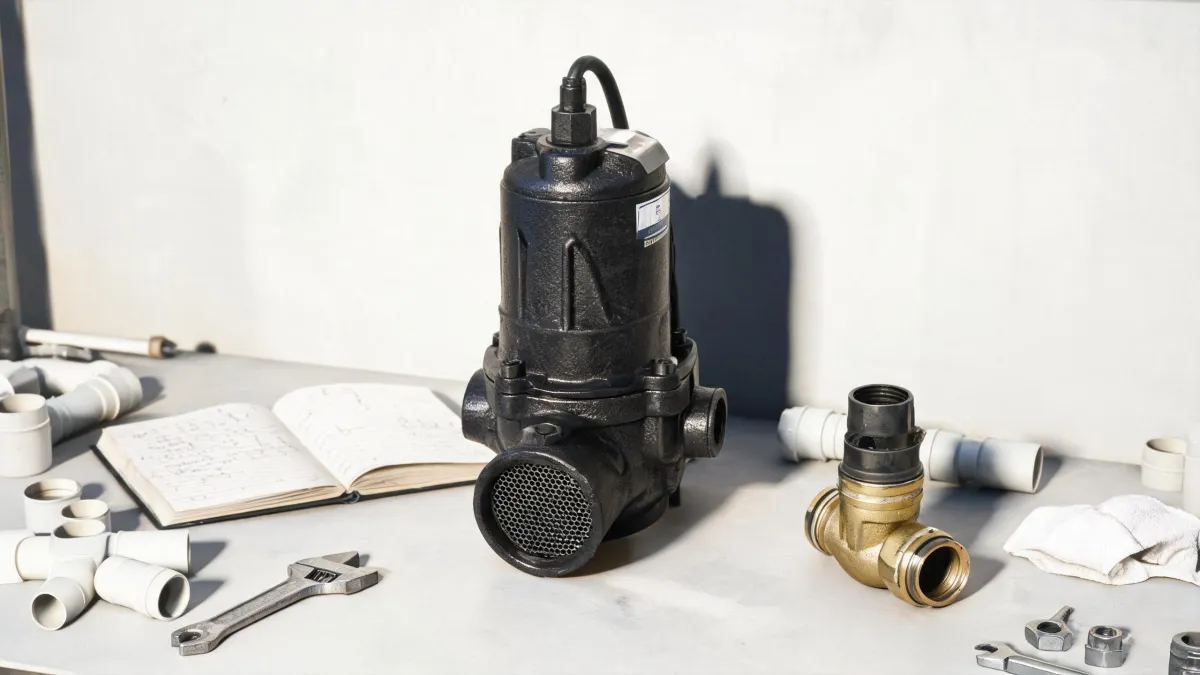
It happened on a Tuesday in March, and I almost approved the wrong purchase order.
Two quotes were sitting on my screen for the same 12-unit condo project. One supplier listed twelve Zoeller 1075 sump pumps at $179.00 each and included delivery to the jobsite: $2,148.00 total. The other quoted the same Zoeller 1075 sump pump at $157.00 each — $1,884.00. My gut said save the $264 and move on. Then the freight estimate hit my inbox, and the math flipped.
Let me back up. I’m the procurement manager for a 14-person plumbing and mechanical contractor. I’ve handled our equipment and supply budget for six years, worked with more than 40 vendors, and logged every purchase in our cost tracking system. The system is not fancy, but it catches the stuff that marketing wants you to ignore.
The project that started it
The job was a 12-unit condominium built in the 1980s. The association finally agreed to replace the original sump pumps after the third emergency service call in one winter. The engineer’s spec was clear: a Zoeller 1075 sump pump in every unit.
If you’re in the trade, you already know the reason. Cast iron housing, dependable float switch, and a track record that plumbers trust. I’m not going to pretend it’s the only decent pump on the market. But when an engineer writes out a model number, my job is to buy that model — not a cheaper story about why something similar is probably fine.
The two quotes
- Heritage Supply. Twelve units at $179.00 each — $2,148.00. Delivery to the site included, net 30 terms, every line item labeled.
- National online supplier. Twelve units at $157.00 each — $1,884.00. Freight and delivery were quoted as “extra.”
I called the national rep and asked the question I should ask on every order: what is not included in this price? He said he would find out. Forty minutes later, a separate email arrived with the freight estimate: $336.00 for the pallet, plus an $85.00 liftgate charge because the condo did not have a loading dock. That added $421.00. The “cheaper” quote total: $2,305.00, which is $157.00 more than the local quote that included everything.
The frustrating part is not that freight costs money. Freight always costs money. The frustrating part is that it appeared after the purchase decision, as its own little surprise. So much for saving $264.
I approved the Heritage quote. Even after I hit send on the purchase order, I kept second-guessing. What if the national supplier had a better freight rate I hadn’t found? What if I just cost the company $264 for no reason? The three days until the pumps arrived were more stressful than they should have been. Then the pallet showed up on time, with the right model numbers and a clean invoice.
Two more orders from the same project
The same renovation generated two more pump orders a week later. The laundry room replacement was an M137 sump pump, and the basement ejector pit needed a Zoeller 1.5 hp pump because the discharge line ran a long way up. Both went through the same local distributor. I did not ask for a discount, and they did not offer one, but every number on the quotation — product, voltage, horsepower, freight — was there before I signed.
Air compressors, grinding wheels, and the same old trick
While we waited on the M137 order, the compressor in our shop finally got too loud to ignore. I started comparing models and noticed the same pattern. Several brands called themselves quiet. One manufacturer published an actual sound level in decibels on its spec sheet. The others just said “quiet,” as if the word itself was a measurement. We bought the one with the number.
The same week, one of our technicians asked me how to choose a grinding wheel. He needed to clean rust off a pump shaft and dress down a weld bead on a bracket. My answer sounded like my buying policy: match the abrasive to the material, check the grit, and never trust a wheel that does not show its maximum RPM on the label. Aluminum oxide for steel and cast iron; a coarser grit to remove material; a finer grit to finish. If the package does not list specifications, it is not a specification — it is a surprise.
The rule I now buy by
Before that March order, I compared unit prices. Now I compare the bottom line after asking one extra question: what else will this order cost before it lands where I need it?
I still kick myself for a 2023 order where I skipped that question. The supplier’s price was $60 less than the next quote, and the delivery cost us $440 in expedites and missed windows. That mistake paid for the spreadsheet habit.
I’ve since added a line to our vendor comparison sheet for freight, liftgate fees, fuel surcharges, delivery windows, and model-number clarity.
I’ve learned to ask what is NOT included before I ask what the price is.
We still buy Zoeller pumps because they’re dependable and the spec sheets are honest. But now I buy them from suppliers who are honest about the whole transaction, not just the product. If a quote won’t show every cost up front, the savings are probably hiding in the blank space at the bottom.
A pump works underwater where nobody sees it. Most quote costs work the same way.

Leave a Reply