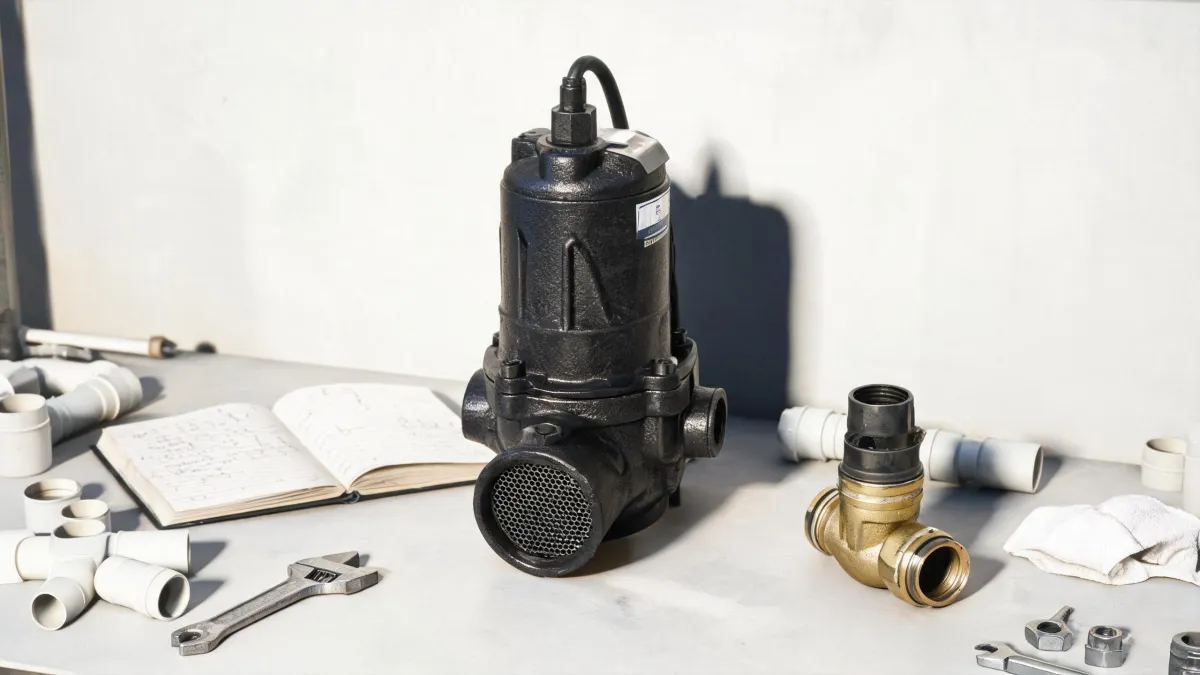
It was 7:40 on a Tuesday in late March when our facility manager called. There was water — about three inches of it — in the basement pump room of one of the buildings we manage. Nothing catastrophic yet, but the old sump pump had decided 14 years was enough. It seized overnight, and the battery backup (which I honestly thought was newer than it was) had run itself flat trying to keep up.
I'm the procurement manager at a 35-person property management company. I've managed our maintenance budget — roughly $120,000 a year — for six years now, which means I've bought more pumps, pipes, and toilet parts than I ever expected to have opinions about. But this was the first time I'd handled a sump pump failure in real time. And in true Tuesday fashion, it turned into an all-day project that touched six different categories in our purchasing system.
The First Call: Finding a Replacement Sump Pump
Our plumber (third year working with him now, after two bad experiences with lower-bid contractors) said something that stuck with me: "If you want to avoid doing this again for a long time, get a Zoeller."
My instinct, as someone who logs every invoice, was to start comparing specs and prices. I pulled up reviews and pump features while standing in the mechanical room with water sloshing around my work boots. Here's where I almost made a classic mistake: I was about to buy a cheaper pump with similar horsepower — same GPH rating, same voltage, nearly half the price.
But when I actually read the spec sheets side by side, the difference was obvious. The Zoeller Pro submersible sump pump has a cast-iron volute. The budget option? Thermoplastic. The Zoeller uses a sealed switch mechanism. The cheap one relied on a float design I'd already seen fail in another building two years earlier. So glad I checked before ordering. Almost went with the budget option to save $90, which would have meant a second emergency service call the next time we got heavy rain (we manage four buildings with below-grade parking, so this is not a hypothetical).
I'm not 100% sure of the exact failure rate — don't hold me to this — but in my experience, cheap float switches die within two to three years, while the cast-iron pumps we've had in other buildings are still running after eight.
What Pumps Actually Cost (Based on 2025 List Prices)
Because I keep a price log (I really should build a dashboard for this someday), here's roughly where the market sits for a 1/3 HP submersible sump pump with a tethered float switch:
- Budget tier (plastic housing, basic float): $80–150
- Mid-range (composite, better switch): $150–250
- Contractor-grade (cast iron, sealed switch): $250–400
That's based on publicly listed prices at plumbing supply houses, and it probably still holds as of 2025. Prices move with freight costs, so treat it as a range, not a quote.
It's tempting to think a pump is a pump. The "just match the horsepower" advice ignores the fact that a 1/2 HP pump with a weak housing can fail long before a 1/3 HP pump built with proper materials. The real cost isn't the sticker price — it's the service call, the cleanup, the tenant disruption, and the phone call with the insurance adjuster that none of us ever want to make.
We paid $320 for the Zoeller Pro through our supply house. It's the kind of purchase that feels hard to justify in the moment and completely obvious in hindsight. (Mental note: I should frame it that way at next year's budget review.)
The Check Valve Nobody Warned You About
Here's the part I didn't know until the plumber started pulling out the old discharge pipe (the pipe that carries water up and away from the pit): the check valve was shot. The check valve is the one-way flapper that stops pumped water from flowing back down into the basin when the pump shuts off.
The old one was a generic PVC valve installed six years earlier, and it was barely holding. Water was seeping backward every cycle, which meant the pump was running twice as often as it needed to. Did that extra cycling cause the pump to die? Probably not directly, but it didn't help.
People think a check valve is a check valve. The Zoeller 30-0151 check valve is a different animal: it uses a weighted rubber flapper instead of a spring. Springs corrode and stick. The flapper just seals with gravity and water pressure. Overpriced? Maybe a little. But I'd rather spend $24 on the right component than discover the nuance when my new pump is short-cycling itself into an early grave.
- Generic PVC swing check valve: $8–15
- Branded replacement (Zoeller 30-0151 class): $20–35
Again, public pricing, 2025, and it varies by supplier. The point is you're not saving the world by going generic here.
Then Everything Else Happened
You know how projects expand? Replacing that pump uncovered a chain of small jobs. This is where my afternoon went:
The Variable Speed Angle Grinder Purchase
The old discharge pipe was rusted and glued in ways that made cutting it out with the crew's ancient reciprocating saw a 40-minute exercise in frustration. Our maintenance lead said, "We could cut through this in two minutes with a grinder." We didn't own one.
So I did the quick math on buying a tool vs. paying plumber labor at $95 an hour. A decent angle grinder with variable speed was $79 at the supply house. Even if we used it once and it sat in the shop, it was cheaper than paying someone to wrestle with a hand saw. And variable speed mattered more than I expected — when you're cutting pipe, you want to dial the RPM down so friction doesn't melt plastic or snap the wheel. It handled the cut cleanly, and it's now in our tool cabinet.
This is probably the least glamorous purchase of the day, but it validated something the maintenance team tells me constantly: the right tool for a 10-minute job is cheaper than the wrong tool for 40 minutes.
The P-AAA Small Submersible Pump
While we were at it, the building engineer asked about dewatering a small elevator pit in another building that kept collecting groundwater after storms. Draining it by hand, he said, had become a weekly chore.
The P-AAA small submersible pump from Zoeller is a tiny thing — about the size of a thermos — designed for exactly this kind of light duty. Not for sewage, not for continuous operation, just for moving water out of a pit before it becomes a problem.
I bought it mostly because our vendor had it in stock for $85 and the engineer promised it would save him a couple of hours every time it rained. Two hours of his time costs more than the pump. That math took me about four seconds.
The surprise wasn't how well it worked. It was how quickly the engineering team started building a list of similar "boring" tools that save ridiculous amounts of labor. The boring stuff is where budget wins actually live.
Yes, the Office Chair (Wait for It)
And then there was the office chair. In the middle of all this, our office manager asked — I am not kidding — if I could "quickly figure out how to replace hydraulic cylinder on office chair," because the one in accounting had been slowly sinking since January. I spent what I'll admit was way too long watching videos and comparing replacement parts. A $25 cylinder and a YouTube tutorial later, the chair was fixed.
I'm not going to pretend a sump pump failure and a sagging office chair are the same level of urgency. But the underlying pattern was identical: understand the actual failure, price the fix properly, and don't assume the most expensive option is automatically right — or that the cheapest one is. The cylinder was $25. The pump was $320. Both decisions used the same logic.
What the Invoice Actually Looked Like
Here's the full breakdown, because I know that's why you're reading:
- Zoeller Pro submersible sump pump: $320
- Zoeller 30-0151 check valve: $24
- Variable speed angle grinder: $79
- P-AAA small submersible pump (elevator pit): $85
- Plumber labor (4 hours, emergency call included): $380
- Office chair cylinder: $25
Total: $913. That's a lot of money for a Tuesday. But compare it to the alternative: if I'd bought the $130 pump with the house-brand check valve, and the same plumber had to come back in 18 months, we'd have spent more. That's before counting the cleanup cost of the next mini-flood, which would be easy to hide inside a much larger invoice.
I've tracked every invoice for six years, and I can tell you this with confidence: the "cheap" option stops being cheap the first time it fails at 10 PM.
The Takeaway (and What I'd Do Differently)
Looking back, the real lesson wasn't about pumps at all. It's about not making decisions in an emergency. Make them before, when you're calm, based on total cost of ownership rather than the price tag alone.
I'd rather spend ten minutes explaining options to a client than deal with mismatched expectations later. An informed customer asks better questions and makes faster decisions — whether they're a property manager, a homeowner, or a plumber quoting a repair.
If you're in the middle of a sump pump project right now, here's the checklist I wish I'd had:
- Replace the check valve at the same time. Always. It's a $25 part that protects your new pump from short-cycling.
- Buy the cast iron. The plastic pumps work fine until they don't, and the price difference is usually only $100–150.
- Do the labor math before you decide whether to buy a tool. Most of the time, buying the tool wins.
- Track everything. The boring invoices add up, but they're also how you find out where the money is actually going.
Our new Zoeller has been running for a few months now. The check valve seats properly. The elevator pit stays dry. The office chair holds its position. And the next time something breaks, I'll have a much better idea of what it costs to fix it right the first time.

Leave a Reply