-
Is Zoeller actually a good sump pump, or is it just what my supply house pushes?
-
What's the deal with the Zoeller 508-0007 sump pump — is that the right model for my pit?
-
How do I open a stuck gate valve without breaking the stem?
-
What actually belongs in a loaded tool box for sump and plumbing calls?
-
How do I buy the right 14 inch chainsaw chain?
-
I only need $40 of parts. Do I have to buy a case to get taken seriously?
-
What does nobody check until the basement is already wet?
Eleven years behind the counter at a plumbing and hardware supply house. Contractor orders, walk-in repairs, the occasional Saturday emergency call from someone whose basement is already wet. In that time I've personally cost my employer somewhere around $9,400 in reorders, restocking fees, and one spectacular check-valve decision that still comes up at company meetings.
These are the questions I actually get asked. If you've ever stood in a supply house aisle second-guessing yourself, you know the feeling.
Is Zoeller actually a good sump pump, or is it just what my supply house pushes?
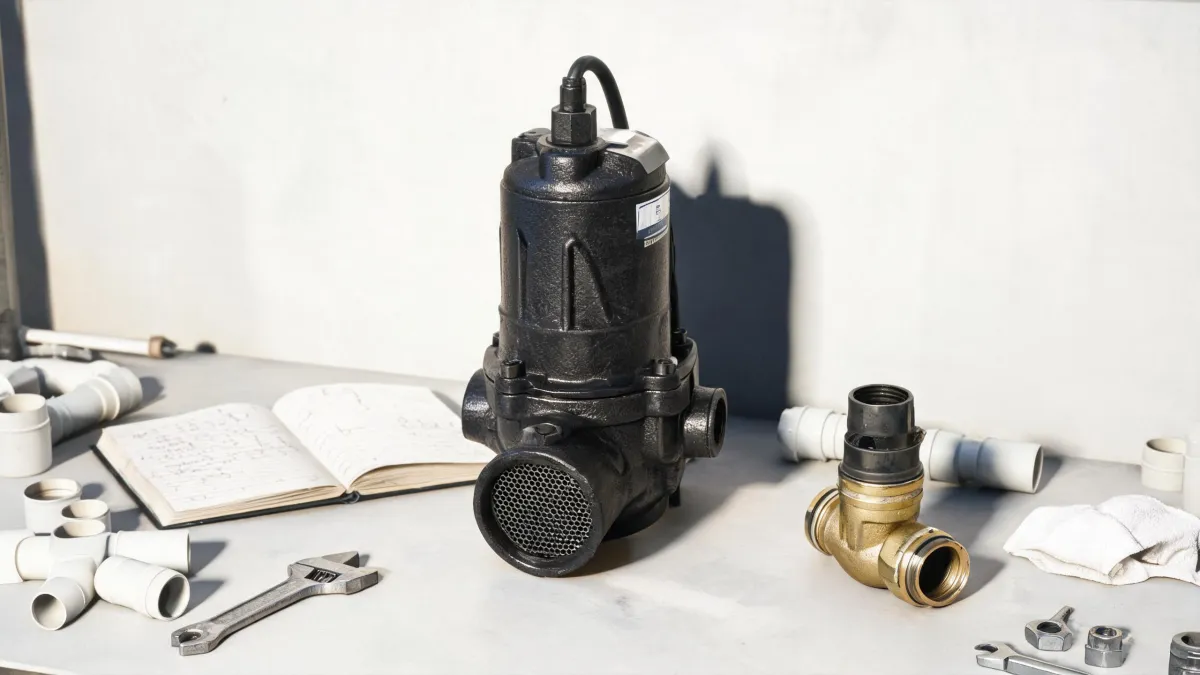
Short answer: yes. Here's the boring reason why. Zoeller builds their pumps in Louisville, Kentucky — that's straight from their own site, zoellerpumps.com — and their submersible models are cast iron, not the stamped steel or thermoplastic shells you'll find on the $80 specials at the big box stores.
Cast iron matters more than people think. A cast-iron housing pulls heat off the motor windings way better than plastic, and heat is what kills sump pumps. Not water. Heat.
Now the part where I eat my own cooking. In 2019 I told a customer — a guy finishing a basement, nice family — that he could save a couple hundred bucks with a cheaper pump and that they're all basically the same. Six months later his basement flooded. Twice. That pump had a plastic impeller and a float switch that jammed on a piece of grit.
He didn't sue us. He just stopped coming in. That's worse.
If you've ever wondered whether the brand-name pump is worth the extra money: yes, but not because of the logo. Because of the housing material, the switch design, and the fact that you can still get parts for it five years later.
What's the deal with the Zoeller 508-0007 sump pump — is that the right model for my pit?
I'm not going to give you the flow rate off the top of my head. I did that once in 2021 and quoted specs from the 508's sister model, and the guy sized his discharge line wrong. Cost about $180 in fittings and one very awkward phone call.
Pull the spec sheet. Seriously. Here's what you actually need to match:
- Discharge size — 1-1/2" vs 1-1/4" changes your whole plumbing setup
- Switch type — vertical float, tethered float, or diaphragm. Vertical float is the one that survives a tight basin
- Cord length — 10 ft sounds generous until the outlet is on the far wall
- HP and shutoff head — the number that actually tells you whether it'll push water up your rise
The 508-0007 is a cast-iron submersible, and I've had good luck with them in 18" basins where a tethered float would've smacked the lid. But check the spec sheet against your pit depth and vertical lift before you buy. Trust me on this one.
One more thing worth knowing: pumps sold in the US carry a UL listing — UL 778 is the standard covering motor-operated water pumps. That listing isn't marketing. It means someone independent burned a motor up so you don't have to.
How do I open a stuck gate valve without breaking the stem?
Slowly. That's the whole answer, but here's the process I wish someone had handed me in my first year.
- Don't put a pipe wrench and a cheater bar on the handle. That's how you twist a stem off inside the body, and then you're cutting the valve out of the line.
- Back the packing nut off a quarter turn first. Old packing grabs the stem like glue.
- Apply penetrating oil at the stem, then wait. Not three minutes — come back after lunch.
- Work the handle a little in both directions. Closed a hair, open a hair. You're trying to break the bond, not force the travel.
- If it still won't move, it's probably a gate that hasn't been cycled in a decade and the seat is scaled up. That's a replacement conversation, not a persuasion conversation.
Hindsight is 20/20: I destroyed a 2" gate valve in a mechanical room back in 2018 because I was in a hurry and reached for the 24" pipe wrench. The valve was $90. The flooded mechanical room was not.
What actually belongs in a loaded tool box for sump and plumbing calls?
Everyone builds a 60-pound box. Then they leave it in the truck and carry around a 5-gallon bucket with the ten things they actually use.
My honest short list: adjustable wrench, channel locks, a 6-in-1 screwdriver, a hose clamp assortment, a spare check valve, Teflon tape, a headlamp (not a flashlight — you need both hands), a small bucket, and a rag. That's it. Everything else is a second trip.
The spare check valve is the piece people skip, and it's the one that matters. A failed check valve means the pump pushes water up the discharge, it drains straight back down, the pump cycles every 30 seconds, and the motor burns out inside a week. That's a $30 part turning into a $250 pump (which, honestly, is a trade nobody wants to make on a Saturday).
How do I buy the right 14 inch chainsaw chain?
Bar length is the least useful number on the package. I learned this the expensive way.
In 2020 I ordered 12 chains for a landscaping crew based purely on "14 inch." Six of them didn't fit. Wrong pitch. I'd assumed every 14" bar took the same chain, which is roughly as smart as assuming every 1/2" pipe takes the same fitting.
What you actually need:
- Pitch — 3/8" low profile, .325", or 3/8" standard. This has to match your drive sprocket.
- Gauge — the width of the slot that rides the bar. .043", .050", .058". Check the stamp on the bar itself.
- Drive link count — stamped on the old chain, usually near one end. Count it if you have to.
All three have to match. A 14" bar can take different drive link counts depending on the saw model. Read the bar, not the marketing copy.
I only need $40 of parts. Do I have to buy a case to get taken seriously?
Not at my counter. And this is the one I'll argue about.
When I started in 2014, I had a customer who came in every other week for a $15 float switch and a roll of tape. Small orders. Annoying orders, honestly, at the time. Nine years later that guy runs three service vans and his monthly account is north of $4,000.
Small doesn't mean unimportant. It means potential.
If a supplier treats your $40 order like a nuisance, that's information about them, not about you. Plenty of us will pull one valve off the shelf, ring it up, and ask if you need anything else. That's not generosity — that's just how you stay in business for forty years.
What does nobody check until the basement is already wet?
Three things. I've personally watched all three fail.
1. The discharge line's freeze point. Where does the pipe actually terminate? If it dumps onto a sidewalk that slopes back toward the house, you've built a machine that waters your own foundation.
2. The weep hole. That little 1/8" hole drilled in the discharge pipe just above the pump. It lets trapped air escape and keeps the pump from air-locking. If someone plugged it with a screw because it was spraying water, your pump will run all night and move nothing.
3. The backup battery's date. Not the green light on the panel — the date stamp on the battery itself. Most are good for about 3-5 years, give or take, and they always die during the storm, which is the one time you need them.
Check all three in the fall. Ten minutes, and it's the cheapest insurance you'll buy all year.
That's the list. If you're standing in an aisle right now trying to remember what pitch your saw takes, go take a picture of the bar first. I wish someone had told me that in 2020, before I ate the cost of six chains that never fit anything.

Leave a Reply