-
Why a Procurement Manager Ended Up Obsessing Over Sump Pump Lifespans
-
The Framework: Three Things, Not Seven
-
Dimension 1: Upfront Price — Budget Wins, and It's Not Close
-
Dimension 2: Real-World Lifespan — This Is Where It Gets Interesting
-
Dimension 3: 10-Year TCO — Where the Math Flips
-
What About the Tools Around the Pump?
-
Who Should Buy Zoeller—and Who Shouldn't
-
Final Note
Why a Procurement Manager Ended Up Obsessing Over Sump Pump Lifespans
I track invoices. Not metaphorically—I mean I actually maintain a spreadsheet with every pump we've bought, installed, and replaced since 2021. I run procurement for a 140-person facilities maintenance company. Our annual budget for pumps, piping, and related hardware sits around $185,000 (part of a broader facilities spend closer to $3.4M).
In late 2021, I noticed something that bugged me: we were replacing sump pumps roughly every 26 months. Not because they died outright—usually because we found cracks during inspection or flow rates had dropped enough that they weren't doing their job. At roughly $450 per swap (pump plus labor), we were burning through replacements on a schedule that made no sense to me.
So I started tracking more carefully. Over 42 months, I logged 22 pump installations across our properties. What I found made me rethink how we budget entirely.
This is the comparison I wish someone had handed me back then.
The Framework: Three Things, Not Seven
Most pump comparisons go sideways because they try to cover everything—flow rates, head height, switch types, cord lengths, certifications. All of that matters, sure. But for a cost-focused comparison, I only care about three things:
- Upfront price—the number on the quote
- Actual service life—months in service, not warranty length
- 10-year total cost of ownership—including labor, downtime, and the "surprise" costs
Each dimension below puts Zoeller directly against the budget tier (the $80–150 thermoplastic pumps most of our sub-vendors push first).
Dimension 1: Upfront Price — Budget Wins, and It's Not Close
Here's what sump pump pricing looked like in our last round of quotes (Q4 2024, so verify current rates):
- Budget thermoplastic submersible (1/3 HP): $80–150
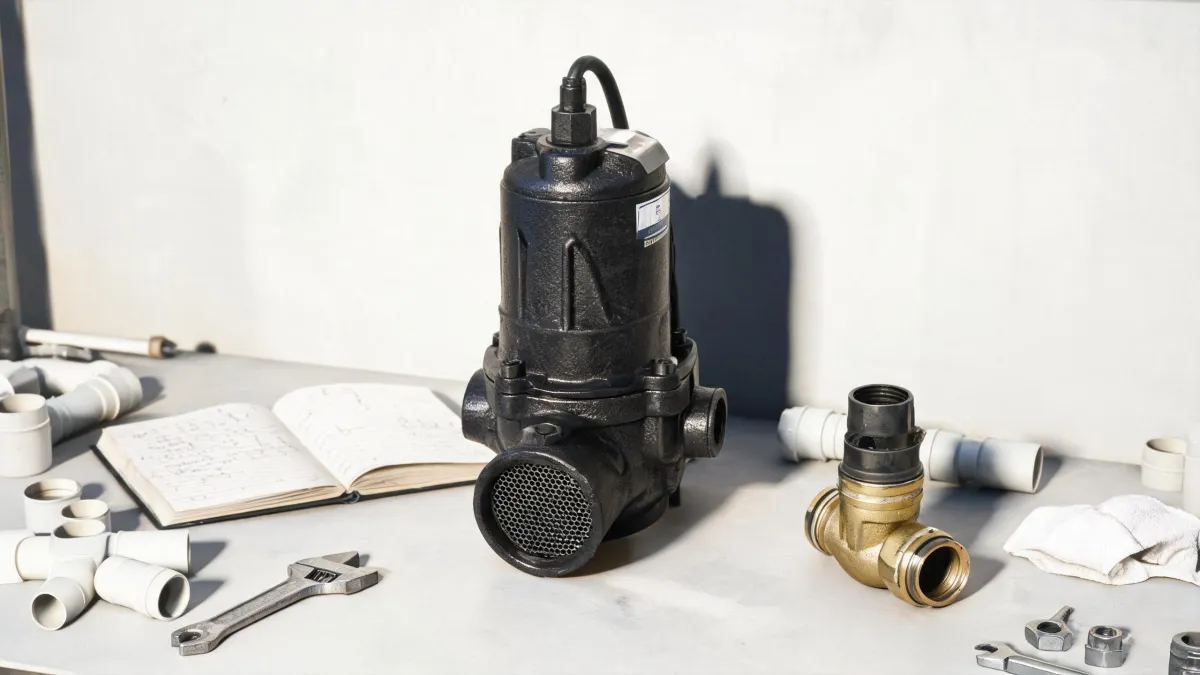
- Zoeller submersible (1/3 HP, cast iron): $200–450 depending on model and switch type
That's a 2–3x gap. If you're only looking at the purchase order, the answer is obvious.
But here's the thing I've learned after getting burned on "budget-friendly" decisions twice. From the outside, it looks like Zoeller charges a premium for the name. What most maintenance managers don't see is what happens inside the housing after year three—cast iron holds its shape. Thermoplastic (the budget standard) warps, cracks, and eventually lets water into places water should never be.
I bought a 1/3 HP Zoeller for a basement that had chronic seepage. Paid $310. The budget pump that had lived in that same pit before lasted 27 months and cost $115 upfront.
Two-and-a-half years vs. (so far) four years running. And the Zoeller is still going.
Dimension 2: Real-World Lifespan — This Is Where It Gets Interesting
Published lifespan numbers are all over the place. Manufacturer warranties tend to be silent on the whole "how long will this actually last" question, mostly because there are too many variables.
Here's what our tracked data showed (Q3 2021 through Q1 2025, 22 pumps across 11 properties):
- Budget thermoplastic sump pumps: average 24–31 months before replacement was needed (some failed inspection earlier, some made it closer to three years)
- Zoeller cast-iron submersible pumps: still running after 42+ months in most cases—we've replaced exactly 1 out of 9, and that one was in a pit with unusually sandy inflow
I want to be fair here—that's a small sample. Eleven properties, mostly light commercial basements with typical seepage conditions. If you're pumping heavy solids or running a sewage ejector 20 times a day, your numbers will look different.
But the gap is big enough that it's not noise. Zoeller's cast-iron construction and sealed motor housing genuinely hold up better in wet environments. That's not marketing—that's what our inspection logs keep showing.
Dimension 3: 10-Year TCO — Where the Math Flips
This is the part that changed our procurement policy.
Budget pump over 10 years:
- Pump cost: $120 × ~4.3 replacements = $516
- Labor per swap (internal rate): ~$200 × 4.3 = $860
- Emergency call premium when pumps fail silently at 2 AM: happened twice, roughly $180 extra each time
- One incident where a failed pump led to water damage in a storage room: $1,200 insurance deductible
- Estimated 10-year cost: $2,900–3,300
Zoeller over 10 years:
- Pump cost: $310
- Installation: $200
- Expected replacement: 0–1 units
- Annual inspection: already included in our maintenance schedule
- Estimated 10-year cost: $510–850
So the pump that costs 2.6x more upfront ends up costing roughly one-third as much over a decade. That's the hidden part of the spreadsheet most people never build—because the cheap option's costs are deferred, not eliminated.
Dodged a bullet when we switched. I was one budget cycle away from ordering another round of budget pumps to "save money."
What About the Tools Around the Pump?
If you're doing your own installs, the accessories matter too. A proper hose clamp (the kind that actually seals, not the kind that strips when you tighten it) and a solid hose clamp pliers set are worth having. So is a decent tool box to keep them organized—I use a TSTAK II for our field kits, and it's held up fine.
For contractors buying used gear: used chainsaws for sale by owner can be a legitimate deal, but inspect the chain brake and check for oil leaks before you hand over cash. That's off-topic, I know. Just a habit from too many bad Craigslist purchases.
Who Should Buy Zoeller—and Who Shouldn't
This is where I stop being neutral, because "it depends" is a cop-out.
Buy Zoeller if:
- You're protecting a primary sump pit in a basement that actually gets wet
- Downtime has real consequences (storage, equipment, finished space)
- You plan to stay in the property more than three years
- You don't want to think about the pump again
Consider a budget alternative if:
- It's a temporary setup (rental prepping for sale, seasonal cabin, emergency patch)
- Your pit sees extremely sandy water—even Zoeller will struggle there, and you'll be swapping units regardless
- Budget is genuinely locked this quarter and you accept the tradeoff
I don't recommend Zoeller blindly. I recommend it when the math actually supports it. In our case, it did—by a large margin.
Final Note
The pricing and lifespan figures in this article reflect our tracked data from Q3 2021 through Q1 2025. Material costs and labor rates shift, so verify current quotes before you build a budget around any of these numbers.
And if you take one thing from this: stop comparing pump prices. Start comparing 10-year costs. The sticker price is the smallest part of the story.

Leave a Reply