-
My Zoeller pump alarm is going off — what should I check first?
-
How do I order Zoeller pump parts without slowing down the job?
-
What should be in a full tool box for pump service calls?
-
How do I read a submersible pump price list without overpaying?
-
What nail gun should I buy for contractor work?
-
Why does the lowest quote often cost more?
-
Can I use generic parts on Zoeller pumps?
-
How do I handle a same-day emergency pump order?
I coordinate emergency pump and tool orders for contractors and property managers. Last year we ran 200+ same-day and next-day orders, so most of these questions come from real callers who are already late, wet, or both. Here are the answers I give when someone asks me on the phone.
- My Zoeller pump alarm is going off — what do I check first?
- How do I order Zoeller pump parts without guessing?
- What belongs in a full tool box for pump service calls?
- How do I read a submersible pump price list without overpaying?
- What nail gun should I buy for contractor work?
- Why does the lowest quote often cost more?
- Can I use generic parts on Zoeller pumps?
- How do I handle a same-day emergency pump order?
My Zoeller pump alarm is going off — what should I check first?
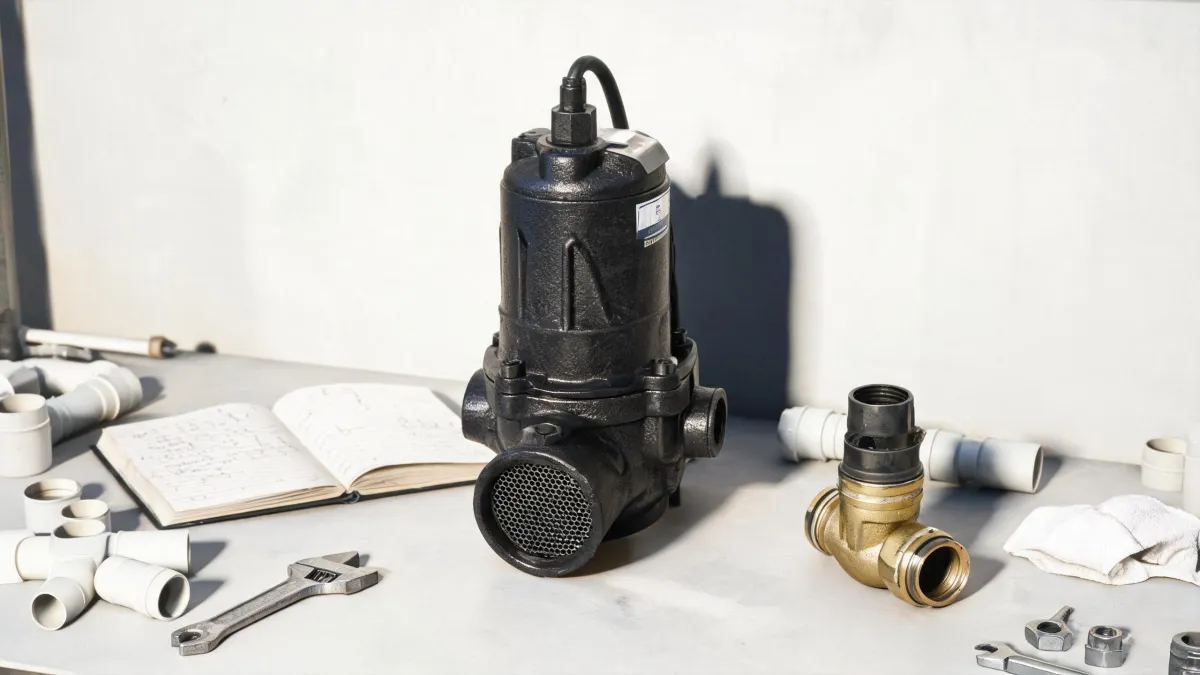
First, don't panic-reset it. A Zoeller pump alarm going off usually means the float or control is seeing a condition you need to understand: high water, a stuck float, a tripped breaker, a dead pump, or a power issue. According to Zoeller owner's manuals, alarm behavior varies by model and control type, so check your specific panel before you start swapping parts. In my role triaging rush calls, I ask three things: Is the pit filling right now? Is the pump running? Is the alarm continuous or intermittent? If water is rising, get a backup pump or manual transfer going before you troubleshoot. If the pit is stable, check the float for debris first. That is the most common call we get. Then test the outlet and breaker. Honestly, a lot of 'pump failures' are actually tripped GFCI outlets or tangled floats.
How do I order Zoeller pump parts without slowing down the job?
Get the model and serial number before you call. Not the family name — the exact data plate. Zoeller pump parts can look similar across sump, sewage, and effluent models, but switches, floats, cords, and impellers are not universal. I learned that the hard way in my first year: I assumed a generic float switch would drop into a Zoeller sump pump because the threads matched. It didn't work with the alarm circuit. Cost me a two-hour callback and a $95 return. Now I photograph the data plate, the old part, and the wiring before I order. If it is an emergency, call your distributor and ask what they have on the shelf for that exact model. A 20-minute job—well, 20 minutes if the old pump comes out clean—turns into a half-day if the part is wrong.
What should be in a full tool box for pump service calls?
A full tool box for pump work is not the same as a general contractor box. You want repeatable, wet-environment tools: adjustable wrenches, pipe wrenches, pump pliers, screwdrivers, a multimeter, wire nuts, electrical tape, PTFE tape, a small bucket, rags, nitrile gloves, a headlamp, and a spare check valve if you carry one. I also keep a cheap plastic tarp and a sharpie for labeling wires. The tarp matters more than people think. In March 2024, a property manager called at 4:40 p.m. needing a Zoeller sewage pump and alarm panel for a 6 a.m. inspection. Normal lead time was two days. We found the parts at a nearby branch, paid $180 in rush courier fees, and delivered by 7:15 a.m. Missing it would have meant a failed inspection and a delayed tenant move-in. The tools that saved us were the multimeter and the labels.
How do I read a submersible pump price list without overpaying?
Treat a submersible pump price list as a starting point, not a total cost. As of May 2026, contractor pricing for 1/3 HP submersible sump pumps commonly runs around $150-$350, while sewage and effluent models can run $300-$900 depending on horsepower, cord length, switch type, and solids handling. Verify current pricing with your distributor. But the sticker price is only one line. Add the alarm, check valve, discharge kit, labor, emergency freight, and the risk of a callback. I have seen a $320 pump turn into an $800 day after a failed switch and a weekend service call. The $480 pump with a better switch and local parts availability was actually cheaper over 18 months. Per FTC advertising guidance, claims like 'best' or 'guaranteed' need evidence, so I ignore price lists that lean on hype instead of specs. Calculate TCO before you compare quotes.
What nail gun should I buy for contractor work?
It depends on the job, not the brand loyalty. For trim and finish work, a 15-gauge or 16-gauge finish nailer is usually the sweet spot. For framing, a 21-degree or 30-degree framing nailer. For small trim and cabinet work, an 18-gauge brad nailer. If you are already on a battery platform, stay on it — batteries and chargers are a big part of total cost. If you rarely use a nailer, a pneumatic setup can be cheaper upfront, but then you need a compressor and hose. I tell contractors to buy the nail gun that matches 80% of their work and rent or borrow for the other 20%. The cheapest nailer on sale is rarely cheap if it jams on every third shot. Also, check local codes and jobsite rules before buying a framing nailer; some commercial sites restrict certain types.
Why does the lowest quote often cost more?
The conventional wisdom is to always take the lowest quote. My experience with 200+ rush orders suggests otherwise. The $500 quote turned into $800 after shipping, setup, and revision fees. The $650 all-inclusive quote was actually cheaper. TCO includes unit price, freight, labor, downtime, return fees, and risk. When a pump fails during a tenant move-in, the cost is not just the pump. It is the emergency call, the water damage, the angry client, and the callback. I now calculate TCO before comparing any vendor quotes. That does not mean pay more for no reason. It means make the hidden costs visible. If a vendor cannot explain lead time, warranty, and return policy in writing, their low price is basically a guess.
Can I use generic parts on Zoeller pumps?
Sometimes, but not automatically. A generic part may fit physically and still fail electrically or mechanically. Float switches, alarm sensors, check valves, and impellers are common problem areas. Zoeller pump parts are model-specific for a reason. I ask three questions: Does the distributor list it for the exact model and serial range? Does the control voltage match? Does the manufacturer warranty still apply? If the answer is no on any of those, I avoid it on a paid service call. On a temporary emergency repair, a generic part might get you through the night, but tell the customer it is temporary. Do not assume a part is compatible with every system. That mistake is how a $40 part creates a $400 callback.
How do I handle a same-day emergency pump order?
Call, do not email. Have the model, serial, voltage, phase, cord length, and switch type ready. Ask the distributor what is physically on the shelf, not what the website says. Offer to pick up if that saves two hours. If you need delivery, get the cutoff time in writing. I keep a short list of local branches that actually answer the phone after 4 p.m. In our busiest season, when three clients needed emergency service on the same Friday, we split the orders by geography and sent one driver on a loop. We paid $260 extra in fuel and overtime, but saved three service calls. Missing those deadlines would have meant weekend emergency rates and unhappy property managers. Time is a cost line. Treat it like one.

Leave a Reply