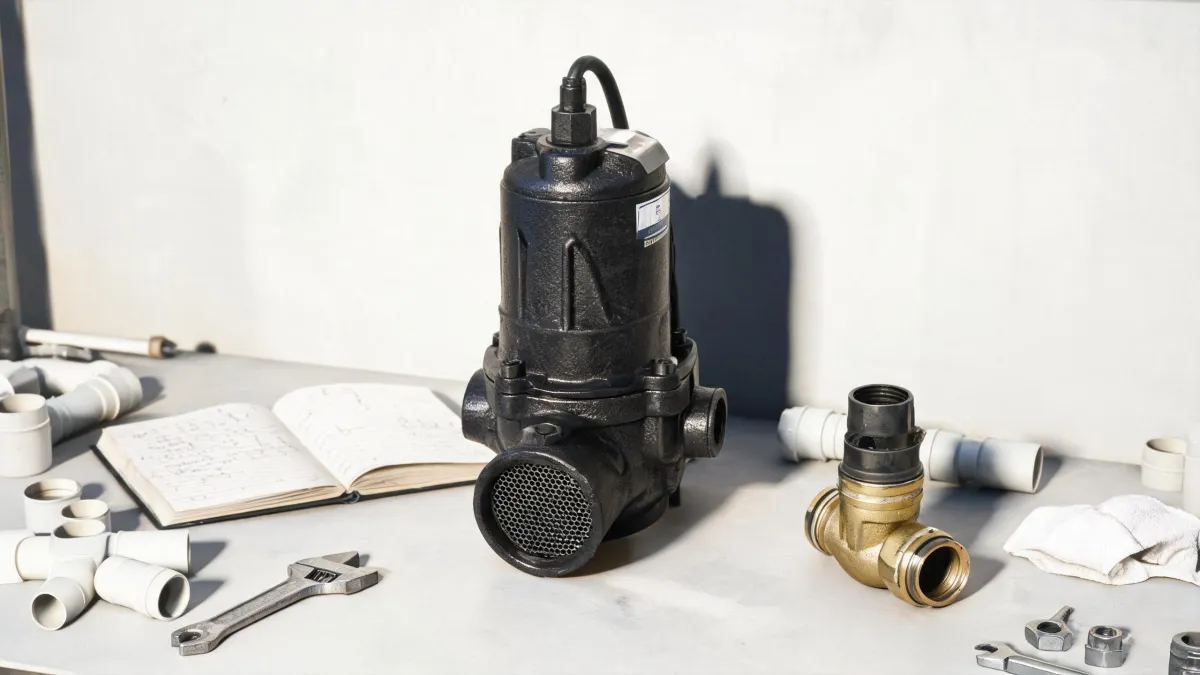
Every quarter, the same conversation happens in my office. A crew lead walks in with a fuel receipt and a story. The pump died on site. The plumber had to run back to the supply house. The emergency order cost double. I process the invoice, and I don't say much. Because the pump isn't the problem.
I'm the procurement manager for a 40-person mechanical contractor. I've managed our maintenance and equipment budget—about $260,000 a year—for 8 years. I've negotiated with 20+ vendors, logged every order in our cost tracking system, and reviewed enough purchase orders to know where the money disappears: it goes to the things we didn't check before turning the key.
The Surface Problem: A Pump Failure Is a System Failure
When a pump stops working, the obvious response is to buy another pump. That's what we did for two years. The budget still bled.
Look closer and the same pattern appears. The pump burned out because it ran dry. It ran dry because nobody primed it. Nobody primed it because the crew had never been shown how. The fix wasn't a new pump. It was a procedure. If your crew can't answer 'How do you prime a trash water pump?' before they start, that's a red flag.
Deep Cause: We Buy Parts Instead of Systems
Most of the cost issues I see come down to one word: compatibility. Not brand. Not price. Compatibility.
We didn't have a formal spec-check process. It cost us when a $38 part turned a routine repair into a $3,400 invoice. Last year, we had a job with a 2-inch discharge line. I sent an apprentice to the supply house for a check valve. I said 'get a 2-inch slip check valve.' He heard 'grab whatever's cheapest.' Result: wrong part, failed within a week.
The right call was the Zoeller 30-0021 2" slip check valve. According to Zoeller's spec sheet, as of May 2026, the 30-0021 is a 2-inch slip connection. That should have been a 30-second lookup, not a second service call.
Is the Zoeller 30-0021 the only good check valve? No. But it's the one that matched the spec. And a spec match is what prevents a job from becoming a rework event.
Priming: The Five-Minute Conversation That Saves Five Days
Trash water pumps are built for dirty water with solids. Some are self-priming. Self-priming doesn't mean 'just flip the switch.' You still need to fill the pump body with water before startup. If you don't, the pump spins with no water to move, and seals and impellers get destroyed.
I'm not an engineer, so I won't pretend to explain the hydraulic curve. From a procurement standpoint, if the crew can't tell me how to prime a trash water pump, we're not ready to run one.
Where the Money Actually Leaks
When I audited our 2023 spending, I found that about 19% of our pump and tool repair budget went to things that happened after the first failure: overnight freight, overtime installs, and replacement parts. Maybe 19.4%? I'd have to pull the report. It's in that ballpark.
Three line items stand out:
Air Compressor Pumps Bought on Price
We replaced two air compressor pumps in one fiscal year. Both had been bought on price, not on duty cycle. The pump is the heart of the compressor, and a cheap pump isn't a deal—it's a loan with interest. Total cost told a different story. Red flag: when a spec sheet doesn't state a duty cycle or a clear warranty, I assume the good part is missing.
Saw Blades Mismatched to the Job
A 12-inch 80T circular saw blade costs more than a basic blade, and it's not the right blade for every cut. But if the cut list is mostly thin-wall metal or plastic, a 12-inch 80T circular saw blade pays for itself because you don't scrap six workpieces. I used to sign off on whatever blade was cheapest. I stopped after a cheap blade burned through a sheet that cost more than ten blades.
Upflush Systems Sized by Guesswork
Zoeller pump upflush systems are a smart way to add a bathroom where a waste line isn't. The problem happens when someone treats them like a standard sewage ejector and ignores fixture counts. If you add a sink or a shower, the pump load changes. Verify the model against the fixture count before you set the tank. This gets into plumbing code territory, which is outside my expertise, so I'd confirm venting and fixture counts with the local inspector before ordering.
The Cost of 'We'll Fix It Later'
Multiply those stories and you start to see the real cost. It's not the $70 check valve. It's the $230 service call, the $150 overnight shipping, and the call from the general contractor asking why we're behind schedule.
I still kick myself for the time we ordered a no-name air compressor pump because the price was 20% lower. I didn't check the duty cycle or the warranty terms. It died in 14 months. The replacement cost about $900 more than we saved. That mistake is in the spreadsheet, and it keeps me honest.
I have mixed feelings about brand loyalty in procurement. On one hand, familiarity helps. On the other, specs matter more than names. That's why I don't say 'just buy Zoeller.' I say 'check the spec, and if Zoeller matches, it's a solid choice.'
Prevention: The Checklist Approach
Here's the part where I could lay out a 20-step procurement process. Instead, here's the checklist I use every time I approve a pump or tool order:
- Before you buy, confirm pipe size, connection type, flow direction, and pressure rating. For example, the Zoeller 30-0021 2" slip check valve is a 2-inch slip connection. Don't assume.
- Before you install, read the manual page on priming. If it's a trash water pump, someone on the crew should be able to answer 'How do you prime a trash water pump?' with a sentence, not a shrug.
- For upflush applications, match the pump to the fixtures served. Zoeller pump upflush systems have specific model capacities; confirm the fixture count.
- For air compressor pumps, compare pump displacement, duty cycle, and warranty, not just the quote.
- For saw blades, match tooth count and material. A 12-inch 80T circular saw blade is great for finish cuts, but not for thick structural steel.
5 minutes of verification beats 5 days of correction. That's not a slogan. It's the summary of every invoice I've signed.
Oh, and one more thing: checking isn't just looking at the box. It's reading the manual. It's pulling the spec sheet. It's asking the crew one question before they start.
Next time a pump fails on your site, ask what failed before the pump. Then ask whether your process was designed to catch it. If the answer is no, you don't need a more expensive pump. You need a checklist.
Bottom line: the pump isn't the problem. The missing verification is.

Leave a Reply