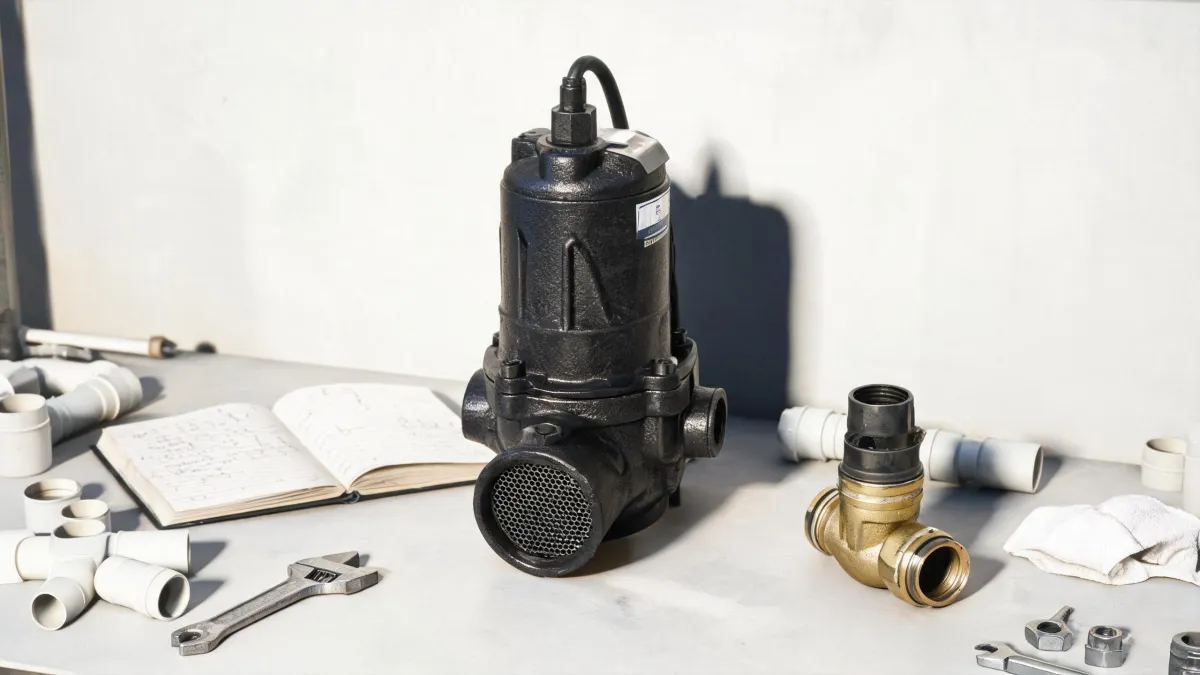
At 1:14 a.m., the phone rang. The overnight guard said water was spreading across the storage closet floor. Again.
That 'again' is the reason I'm writing this. We had replaced that sump pump six months earlier. New pump, new float switch, signed work order. And there I was, awake at 1:15 a.m., doing mental math about wet drywall.
Confession: I'm not a plumber. I'm an office administrator. Since 2020, I've handled facilities purchasing for a company of about 400 people across three buildings—everything from filters and light bulbs to maintenance contracts. That's roughly $300,000 a year in vendor spend across eight or nine suppliers. Pumps were never supposed to be my problem.
But after five years of managing this stuff, I've learned more about sump pumps than I ever wanted to. The biggest lesson? Most repeated sump pump failures are not pump failures. They're setup failures wearing a pump-shaped costume.
The Problem We Kept 'Solving'
Between 2021 and 2023, that one little storage closet cost us about $4,800 in service calls and replacement pumps. The failure looked normal every time: the pump ran, the basin stayed full, the motor got hot, and eventually the thermal overload shut it down.
So we called a plumber. He pulled the pump, dropped it in a five-gallon bucket, and it pumped water perfectly. He reinstalled it. A month or two later, the same phone call. We repeated that dance three times.
After the third visit, I finally asked a different question. Not 'which pump should we buy?' but 'why does a healthy pump keep failing in this exact pit?' The answer made me want to kick something.
The Pump Was Never the Whole Story
The Zoeller Sump Pump Weep Hole Was the First Real Clue
Submersible pumps have to push air out before they can push water. When the basin fills and the pump starts, the impeller spins. If a pocket of air is trapped in the pump casing or discharge pipe, the impeller just churns that air instead of building pressure. The motor runs. The water doesn't move. That's an air lock.
An air-locked pump looks dead. It isn't. Pull it out and test it in a bucket, and it moves water like nothing was wrong. That's exactly what our plumber found, three times in a row.
The fix is almost insultingly simple. Zoeller's published installation instructions call for a small weep hole—about 1/8 inch—drilled in the discharge pipe between the pump outlet and the check valve. That tiny hole lets trapped air escape so the pump can prime properly. You might see a thin stream of water fall back into the basin while the pump runs. It looks like a defect. It's the system working.
Our installation didn't have a weep hole. Nobody wanted to drill a hole in a brand-new discharge line, so they skipped it. Instead, we bought pumps—two of them—and paid for after-hours callbacks while a hole that cost nothing was missing.
A quick note for the contractors in the room: I'm not telling you how to do your job. I'm telling you what happens on the buyer's side when a small detail gets skipped. It erodes trust fast, and the pump never gets the chance to fail on its own merits.
The Gray-Market Pump and the Zoeller Pump Rep Locator
The purchasing side added its own headache, because of course it did. Around the same time, one of our location managers found a pump online for about $70 less than the going rate. He meant well. The listing looked fine, and the box arrived looking right.
Finance later bounced the invoice because the seller's documentation wasn't enough to code the expense properly. And when we had questions about the pump's history, nobody answered. The listing was for a Zoeller, or something that looked like one, but there was no authorized dealer behind it and no way to get support.
Here's where the industry has genuinely changed since 2020. Back then, 'find the cheapest listing online' sounded like a harmless procurement move. Today it's a real risk category. A legitimate water pump distributor answers the phone, stocks replacement parts, and can tell you whether the pump you're ordering is right for the pit. A random listing can't do any of that.
Now I use the Zoeller pump rep locator before I order anything. It points you to the manufacturer's representative for your territory and lists authorized distributors. It takes about a minute and saves you the kind of trouble that doesn't show up until months later, when the warranty claim lands on a desk and nobody can help.
The Threaded Ball Valve That Was Choking the Pump
Even after we drilled the weep hole, something still felt off. The pump ran, but it ran longer than it should have. The newest plumber on the job timed it, then traced the discharge line and found a valve that wasn't full-port.
The valve had threaded connections and looked completely normal. Inside, though, the opening was about a pipe size smaller than the line. Every time the pump ran, that bottleneck added friction. The pump didn't fail instantly. It just ran hotter and longer, cycle after cycle, in a way that would eventually kill it.
We replaced it with a full-port threaded ball valve—same thread size, open bore all the way through. It cost slightly more. It also restored the flow. For a pump that runs every few minutes during a storm, that's not a luxury. That's the difference between a system that works and a system that slowly cooks itself.
The Price of Ignoring the Setup
Let me give you the accountant's view, because that's my job.
- $4,800 in service calls and replacement pumps on one small closet, 2021 to 2023.
- $1,100 to repair water-damaged wall board and baseboard after one of the 'failures.'
- Three after-hours callbacks, each carrying overtime rates.
- One very awkward conversation with my VP about why we kept flooding the same room.
That's roughly $6,000 because two installation details—a weep hole and a full-port valve—were skipped. No pump, regardless of brand, was going to fix that.
I keep thinking about what my maintenance supervisor said while we reworked the discharge line. He's a weekend fisherman, and he compared the situation to the first time he tried to set up a baitcasting reel. He spent hours tweaking the brakes, convinced the reel was defective, until a friend showed him how to spool bait caster reels the right way. The line tension had been wrong from the start. The reel was fine.
A pump works the same way. Get the setup wrong, and the equipment takes the blame.
One caveat before I sound too sure of myself: my experience is with light commercial sump and effluent pits, mostly 1/3 to 1/2 hp pumps. If you're dealing with sewage ejectors, grinder pumps, or a long horizontal discharge, the failure points are different. And codes vary by location, so check local requirements. The pricing and distribution details above were accurate as of 2025, but markets change.
What I'd Check First (Before Ordering Another Pump)
For anyone staring at a 'failing' pump, here's the order that would have saved us the most money:
- Test the pump out of the pit. If it moves water in a five-gallon bucket, the pump is not the problem. The problem is in the pit or the piping.
- Look for the weep hole. It should be a clear 1/8-inch hole in the discharge pipe between the pump and the check valve. If nobody can verify it's there, that's your first suspect.
- Check the ball valve. If the discharge line has a threaded ball valve, make sure it's full-port. A valve with a narrower bore has no place on a pump discharge.
- Verify the supply chain. Use the Zoeller pump rep locator to find an authorized water pump distributor and keep the paperwork. The few extra dollars up front buy you a human being who answers the phone.
That last step sounds like brand loyalty, but it's really just self-protection. The distributor I work with now talks me out of unnecessary pumps more often than they sell me new ones. That relationship has saved more money than the discount listing ever did.
I still don't love 1 a.m. phone calls. But the last flood-related one was over a year ago, and it wasn't the pump's fault that time either. It was a dripping supply line—a boring, normal problem that didn't require replacing expensive equipment. The kind of problem you can actually fix once you stop blaming the pump.
Pricing, codes, and distribution arrangements change. Verify current details with your local authorized distributor before ordering.

Leave a Reply