It Usually Starts With a Phone Call at the Worst Time
The call comes in on a Tuesday night, mid-storm. There's water creeping across a finished basement floor, and a homeowner or contractor on the other end who wants a name, a part number, and someone at the door tonight.
I've coordinated emergency service for a water-systems supplier for eight years. I've handled 400-plus rush calls in that time, most of them after 6 p.m. and a lot of them on the same three or four nights a year. Here's what I've learned: by the time the phone rings, the failure has already happened. The emergency was set in motion weeks or months earlier, on an afternoon when nothing felt urgent at all.
People call because the pump stopped. That's what they think the problem is. It almost never is.
The Pump Is the Last Thing to Fail, Not the First
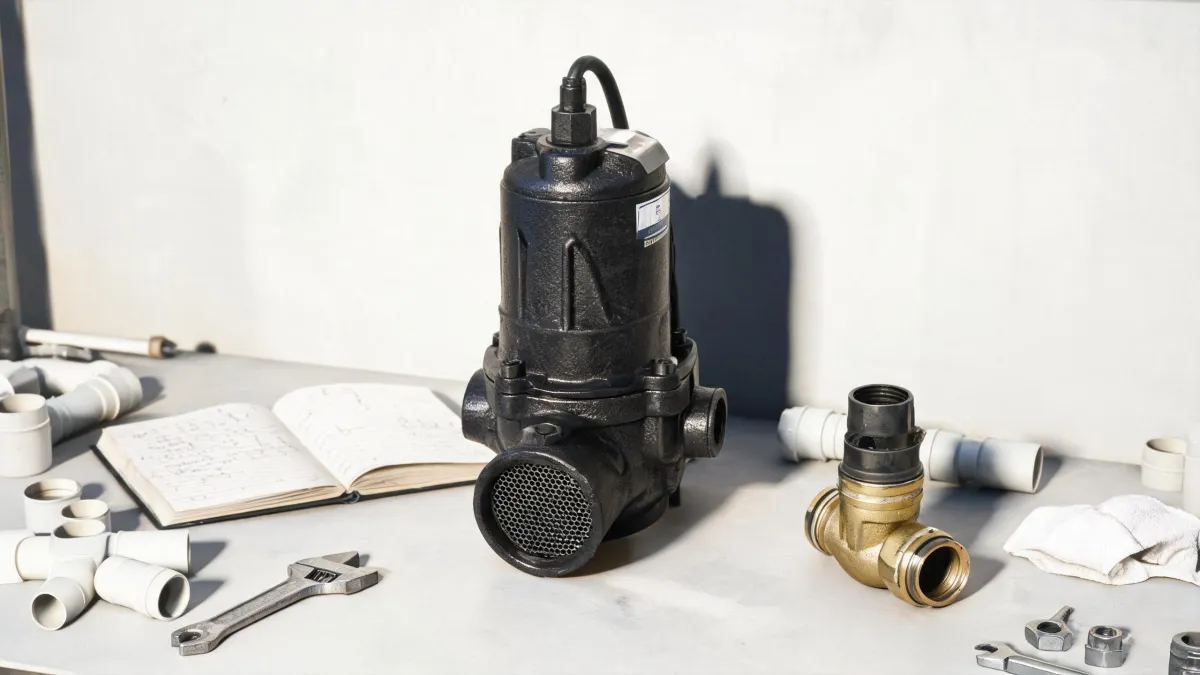
A sump or sewage pump doesn't sit in isolation. It's the last link in a system: the basin, the float switch, the check valve, the discharge line, the power source, and then the pump itself. When one of those cheaper, less visible components gives out, the pump takes the blame because it's the part everyone can name.
Walk through a failed system with me. The float gets hung up on debris, so the pump short-cycles—running every two minutes instead of every hour. That short cycling burns the motor out years before its time. Or the check valve sticks, water drains back into the basin, and now the pump is doing double duty on every cycle. Or the discharge line was sized wrong on install, and the pump has been pushing against resistance since day one.
Did the pump fail? Yes. Was the pump the problem? No. It was just the part that finally failed loud enough to get someone's attention.
I see the same pattern with Zoeller sewage ejector pumps in basement bathrooms and Zoeller under sink pumps in laundry tubs and bar sinks. The pump is built for the job. It's usually the installation around it—the discharge pipe, the venting, the check valve—that quietly shortens its life.
And here's the part most people miss: the cheapest decision is usually the one that feels most sensible at the time. "Buy the pump, install it, move on." What gets skipped is every variable that determines how long the pump actually lives.
Why "I'll Deal With It Later" Is the Most Expensive Line Item
I used to tell people a pump is a pump, and that maintenance could wait until spring. I only stopped saying that after I watched the same thing happen twice in one fall—two houses, same neighborhood, same storm, two very different mornings.
House one: the owner had tested the pump in September, replaced a tired float switch, and cleared the intake. House two: the pump had run "fine" for six years, so nobody touched it. When the storm hit, house one pumped and drained. House two's pump had been short-cycling for months, and the motor finally quit at 11 p.m.
When I compared those two calls side by side, I finally understood something no spec sheet explains:
The emergency isn't the failure. The emergency is the gap between when the equipment starts dying and when somebody notices.
They warned me that skipping cheap maintenance ends up costing the most. I didn't fully believe it—not until I helped one client save $80 on a routine service visit and then watched them spend thousands recovering a wet basement. That's the call I still kick myself for.
What an Emergency Actually Costs
This is where the total-cost math stops being an abstraction. The pump is the smallest number on the invoice.
An after-hours service call carries a premium—often 50 to 100 percent over standard rates. Then there's water extraction, dehumidification, and replacing saturated drywall, which runs into the thousands almost immediately. Then mold remediation if the water sat more than a day. Then the insurance deductible, and the premium increase that follows the claim. If it's a commercial space, you add business interruption on top of all of it.
It took a client of ours two days to get the standing water out—or rather, closer to a week once the drywall and flooring came down. The pump that failed cost about $200. The recovery ran into the tens of thousands.
In October 2024, a property manager called at 6 a.m. needing three ejector pumps replaced before a tenant walkthrough the next morning. Normal lead time was a week. We pulled it off, but the rush premium alone cost more than the pumps themselves. Nothing about that morning was unpredictable. It was just deferred.
This isn't a pump-specific problem. Look at the other equipment I field calls about:
- A 2900 psi pressure washer—people shop the spec, then let the unit sit with old fuel and a dried-out seal until the season they actually need it. The spec was never the issue. Storage was.
- A commercial washer throwing reset error codes—searches for "reset error codes commercial washer" spike when machines stop mid-cycle. Nine times out of ten, it traces back to a sensor or control board that had been warning for weeks, ignored because the machine "still worked."
- A garage door torsion spring—the "how to replace a torsion spring garage door" search is one of the most dangerous queries a homeowner can run. Torsion springs hold enormous tension, and a cheap spring or a rushed install is exactly how people get hurt.
Different equipment. Identical math. The cheap part saves you a little up front and charges you interest at the worst possible moment.
The Fix Is Boring, Which Is Exactly Why People Skip It
Eight years of emergency calls taught me one thing above all: the people who never call me are the ones who plan for the calls they hope never come.
Buy the right equipment the first time. Size it correctly. Test it before you need it. Keep a battery backup on anything protecting a finished space. And when you compare options—whether it's a pump, a washer, or a service contract—add up the real number: unit cost, plus install, plus maintenance, plus the probability-weighted cost of failure.
Look, I'm not saying everyone needs the top of the line. I'm saying the better option is sometimes cheaper than the emergency it prevents. That's not a pitch. That's just what the invoices say.
The pump will fail eventually. Every pump does. The only question is whether it fails on a quiet Tuesday afternoon, or at 11 p.m. during the storm you've been dreading.

Leave a Reply