In March 2024, a property manager for a six-story commercial building called me at 6:47 AM on a Friday. Her voice had that edge—the one I've learned to recognize in the first ten seconds of a call. Water was pooling in the elevator pit. The elevator was shut down. Forty-two tenants were walking up and down stairs, already sending angry emails.
"We need someone today," she said. "Not Monday. Today."
I've been coordinating emergency plumbing and pump repairs for commercial properties for eleven years. In my role triaging rush calls for a service company that handles everything from restaurant grease traps to rooftop HVAC, I've handled somewhere north of 600 emergency jobs. Same-day turnarounds. Holiday weekends. The calls that come in at 2 AM because someone's basement looks like a swimming pool.
This one, though, had a particular wrinkle. Elevator pits are not like basement sump basins. You can't just drop in any pump and call it a day. But I'll get to that in a minute.
The First Two Hours: Diagnosing What Went Wrong
I was on-site by 8:15 AM. The pit was holding about three inches of water—not catastrophic yet, but the float switch on the existing pump was clearly toast. The pump itself (an older cast-iron unit someone had installed during a renovation five or six years ago) was still running, but it wasn't moving water. Impeller clogged? Check valve stuck? Both, as it turned out.
Here's the thing about elevator sump pumps that a lot of general contractors don't fully appreciate: they run in a different environment than a standard basement sump. The water often carries fine debris—concrete dust, rust particles, oil residue from the elevator hydraulic system. That mix chews up cheap pumps fast. And when the pump fails, you're not just looking at a wet floor. You're looking at an elevator shutdown, which means a tenant complaint cascade and, in some buildings, a code violation that has to be resolved before the elevator can be re-certified.
The property manager had already been quoted a replacement by another contractor—a generic ⅓ HP pump from a big-box store, installed for about $850 total. "Can you match that?" she asked.
I get why people go with the cheapest option—budgets are real, and property managers answer to owners. But here's what that quote didn't include: the pump was not rated for elevator pit duty, the discharge pipe size didn't match the existing line, and the installer wasn't planning to replace the check valve. That setup would have been back to failing within eighteen months. I've seen that movie before.
The Decision: Zoeller vs. The Cheap Option
I went back and forth on this for maybe twenty minutes. On paper, the cheap option made the client happy today. But my gut said we'd be back here by fall—and the next call would come on a Sunday, during a rainstorm, when the pit was already overflowing.
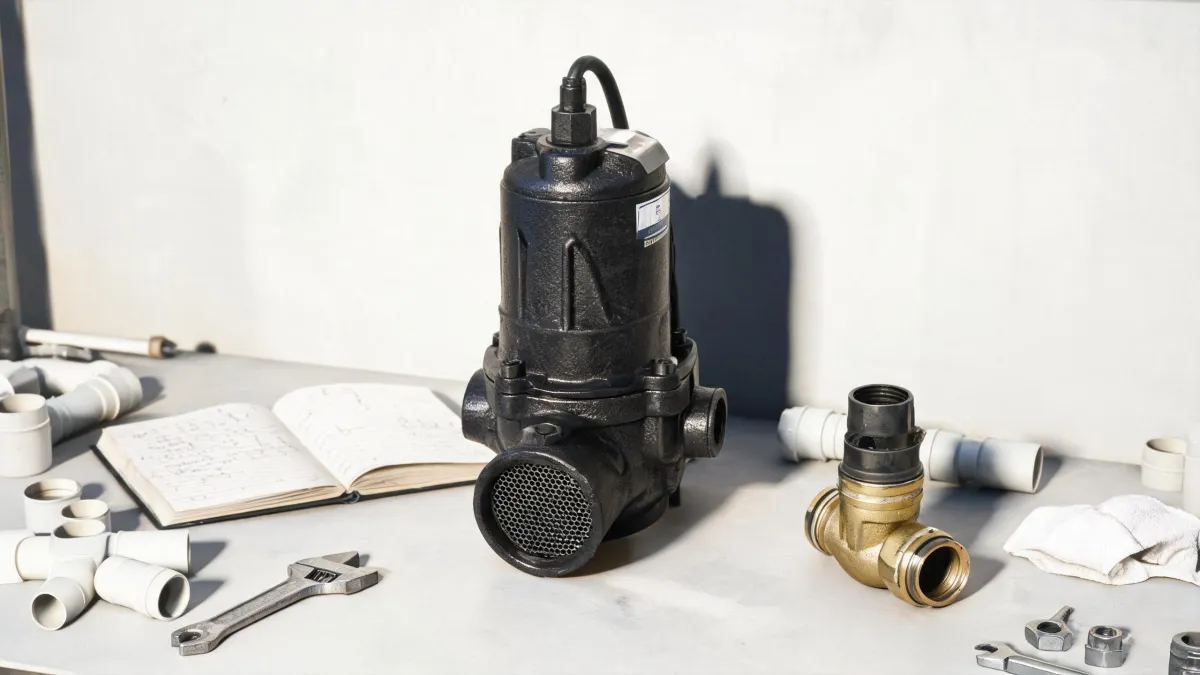
What I recommended was a Zoeller elevator sump pump—specifically a cast-iron unit designed for the debris-heavy water you find in elevator pits. Zoeller pumps are not the cheapest on the shelf. They're also not the most expensive. What they are, in my experience, is consistent. The cast-iron housing handles the grit and heat that plastic-bodied pumps can't. And when I need a pump to last in a commercial setting, that matters more than the invoice line.
She pushed back. I listened. Then I explained the total cost picture: the cheap pump ($180 from the store), plus installation ($670), plus the likely redo in a year (another $850), versus the Zoeller unit ($410), plus installation with a proper check valve replacement ($740). The Zoeller path was $1,150 up front versus $1,700 over eighteen months. And that's before counting the elevator downtime cost, which one of her tenants was already calculating for a potential rent abatement claim.
She approved the Zoeller.
The Complication: A Washer, a Sanding Disc, and a Bad Shortcut
Here's where the day got interesting. While removing the old pump, we found the source of the recurring clogging: the discharge flange had a burr on the mating surface—a rough, uneven edge that was catching debris and slowly eating through the gasket. Someone, at some point, had tried to "fix" a leak by grinding the flange surface down.
And they'd done it with the wrong tool.
I see this more often than you'd think in commercial maintenance. Someone grabs an angle grinder, slaps on whatever disc is closest, and goes to town on a metal surface. In this case, they'd used a sanding disc on an angle grinder to smooth the flange. That's a common mistake—and it's one that can ruin the surface flatness. Sanding discs are designed for wood, paint, and light material removal. On cast iron, they gouge and chatter. The flange ended up with low spots that no gasket could seal reliably.
So now we had two problems: the pump needed replacing, and the flange needed resurfacing or replacing. That added about three hours to the job.
While my apprentice ran to the supply house for a new flange, I made a call to a contractor friend who's been working with Zoeller products for two decades. I asked him the question I get from clients all the time: how long does a Zoeller sump pump last, realistically?
His answer: "In a clean basement, seven to ten years is common. In a dirty pit with grit and oil? Five to seven. But they don't die early because of design flaws—they die because someone skipped maintenance or installed them wrong."
That tracks with what I've seen. The Zoeller pumps in our service fleet that get annual inspections routinely hit the seven-year mark. The ones that fail early almost always trace back to a bad check valve, a clogged intake, or—like this job—a damaged flange that was never properly addressed.
The Fix: 500 Series Washers and a 53-0001 Check Valve
For the replacement, we went with a Zoeller elevator sump pump rated for the pit depth and discharge head. The install itself was straightforward once the flange was sorted. But two small parts made the difference between a repair that lasts and one that comes back:
First, the 500 series washer. If you're working on Zoeller pump assemblies, you'll run into these. The 500 series washer is a specific sealing component used in various Zoeller pump flange connections. It's not a hardware-store item. I've seen installers try to substitute a generic rubber washer and wonder why the joint weeps after a month. The 500 series washer is designed for the pressure and chemical exposure in sump and sewage applications. Use the right part. It's a $4 item that prevents a $400 callback.
Second, the sump pump 53-0001 check valve. This is Zoeller's cast-iron check valve, and it's the piece most people skip when replacing a pump. The old check valve on this job was a plastic model that had been installed backward (yes, really). We replaced it with the 53-0001, which is designed to handle the backflow pressure without the chatter you get from cheaper valves. My rule: if you're replacing a pump, replace the check valve at the same time. They fail at similar rates, and a failed check valve will kill a brand-new pump in short order.
The total bill came to $2,300—more than the original $850 quote, but that quote was for a job that would have needed redoing. This one should hold for five to seven years with annual inspections.
What I Learned (and What I'd Tell Anyone Facing This)
Looking back, there are three things I'd flag for anyone dealing with an elevator sump pump emergency:
1. The cheapest quote is rarely the cheapest outcome. I'm not saying go buy the most expensive pump on the shelf. I'm saying calculate the total cost—including the cost of the next failure. For commercial elevator pits, the downtime cost alone usually justifies the better pump.
2. Use the right tools for the job. That sanding disc on an angle grinder? It caused more damage than it fixed. If you need to resurface a metal flange, use a proper grinding wheel or a file. Sanding discs are for wood and paint, not cast iron.
3. Replace the small parts while you're in there. The 500 series washer and the 53-0001 check valve are not the headline items on the invoice. But they're the difference between a repair that lasts and one that comes back.
To be fair, not every emergency needs a premium solution. If you're dealing with a residential basement sump pump and you're on a tight budget, a mid-range pump with proper installation will serve you fine. I've recommended that path many times.
But for commercial applications—elevator pits, loading docks, wastewater lift stations—the margin for error is too small. I'd rather work with a specialist who knows the limits of a cheap part than a generalist who overpromises. In my opinion, the same goes for the brands you trust. Zoeller has earned its reputation in the trades because it does one thing—pumps—and does it consistently.
That Friday ended with the elevator running again by 4 PM. The property manager sent a thank-you email the following Monday. And I added a note to our internal job log: "Always check the flange. Always replace the check valve. And never let anyone near a cast-iron surface with a sanding disc."
Some lessons you learn once. That one, I've now learned twice—which is once more than I'd like.

Leave a Reply